
A commercial concrete job runs on the spec sheet and the program. From tender, we work to the engineer’s drawings and the builder’s timeline: site prep and excavation, formwork and reinforcement to spec, staged pours where the slab is large, and a finish and cure to the tolerance the job calls for. One team on the dig and the pour keeps it on track.
Updated October 2026.
Commercial work is a different animal to a house slab. The program stakes are higher, the tolerances are tighter, and more people are counting on your slab being right and on time. Builders and developers who put work our way want to know how we run a job before they hand one over, and that’s fair enough.
Here’s what a commercial concrete job looks like from the inside, and the real East Gippsland jobs behind it.
It starts with the spec, not a price
A commercial quote comes off the engineer’s drawings and the program, not a phone call. The spec sets the slab thickness, the reinforcement, the concrete grade, the joint layout and the finish tolerance. The program sets when it has to happen and what it has to fit around.
Before we price a commercial job we read the drawings properly and work out:
- What the slab has to do. An industrial yard taking plant and stored materials is a different slab to an internal warehouse floor with a tight surface tolerance. The use drives the design.
- How it fits the builder’s program. Commercial jobs run to a schedule with other trades either side of us. We work out where the pour sits, what has to be ready before it, and what we are holding up if it slips.
- The site and access. Truck movements, pump requirements, staging room and where the concrete can actually be placed all get worked out up front on a big pour, not on the day.
We quote off that, in writing. Our commercial concrete service is built around getting the spec and the program right before anyone books a truck.
The stages a builder cares about
The stages that matter to a builder are site prep, reinforcement to spec, the pour, and the finish and cure, each hitting the drawing and the program. Every one of them is where a job either stays on track or starts slipping.
Site prep and excavation
Commercial slabs live or die on the base. The pad has to be cut to level, stripped of anything organic, filled where needed and compacted to carry the design loads. On a large-format slab that’s a serious earthworks job before a drop of concrete goes down. We do our own excavation, so the base is prepared to the standard the slab needs, and the dig and the pour are one program, not two contractors and a gap in the middle.
Formwork and reinforcement to spec
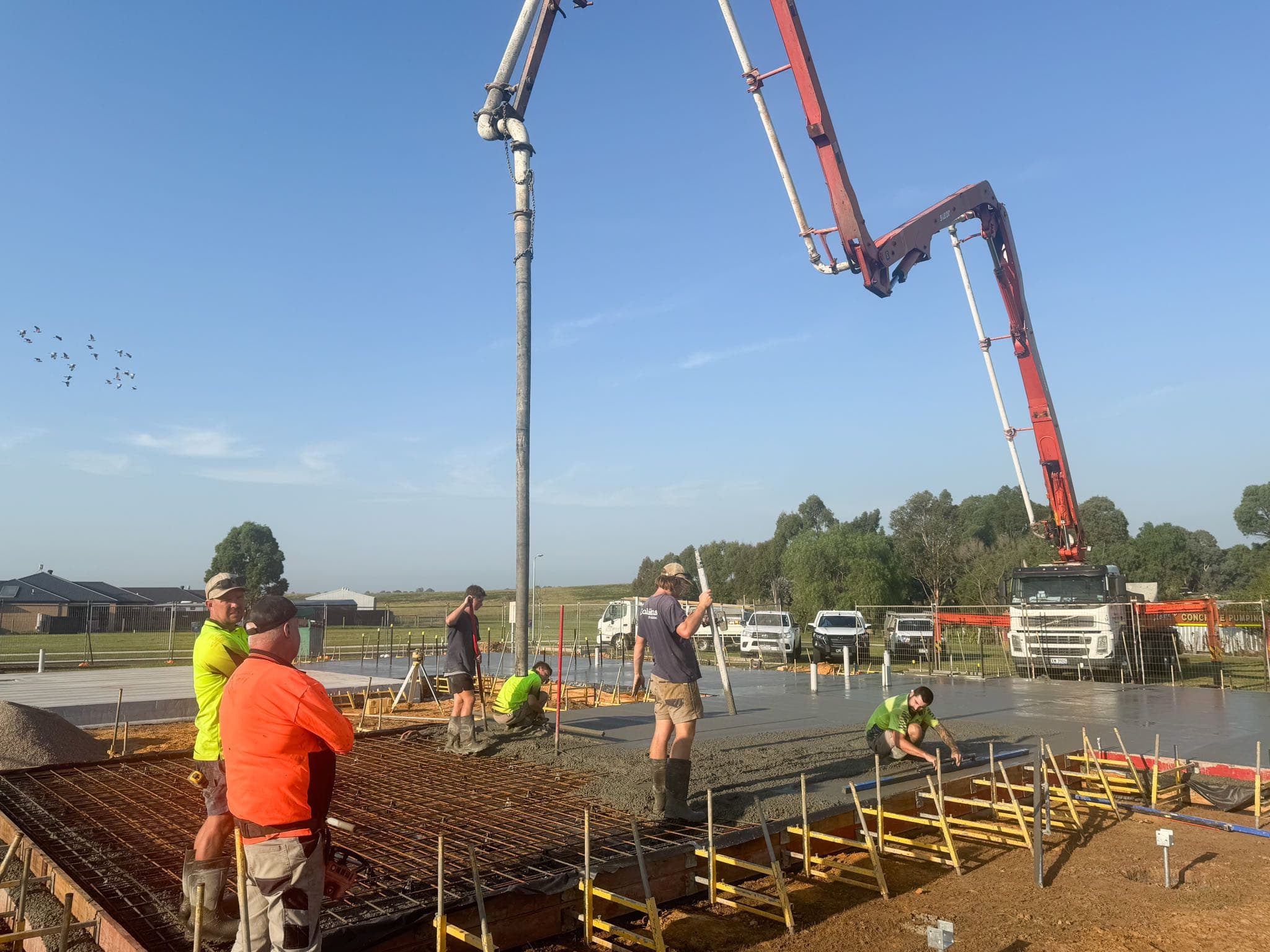
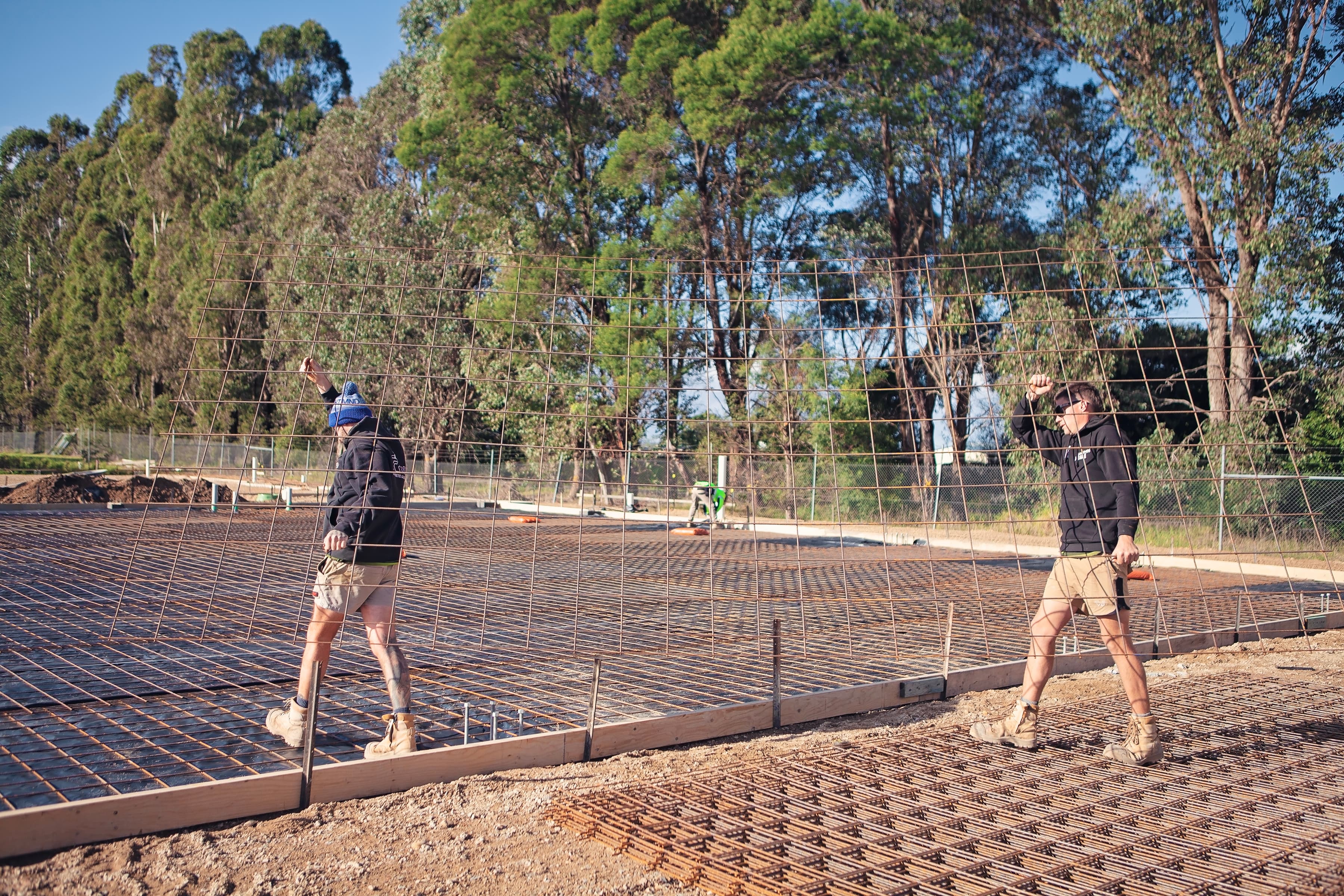
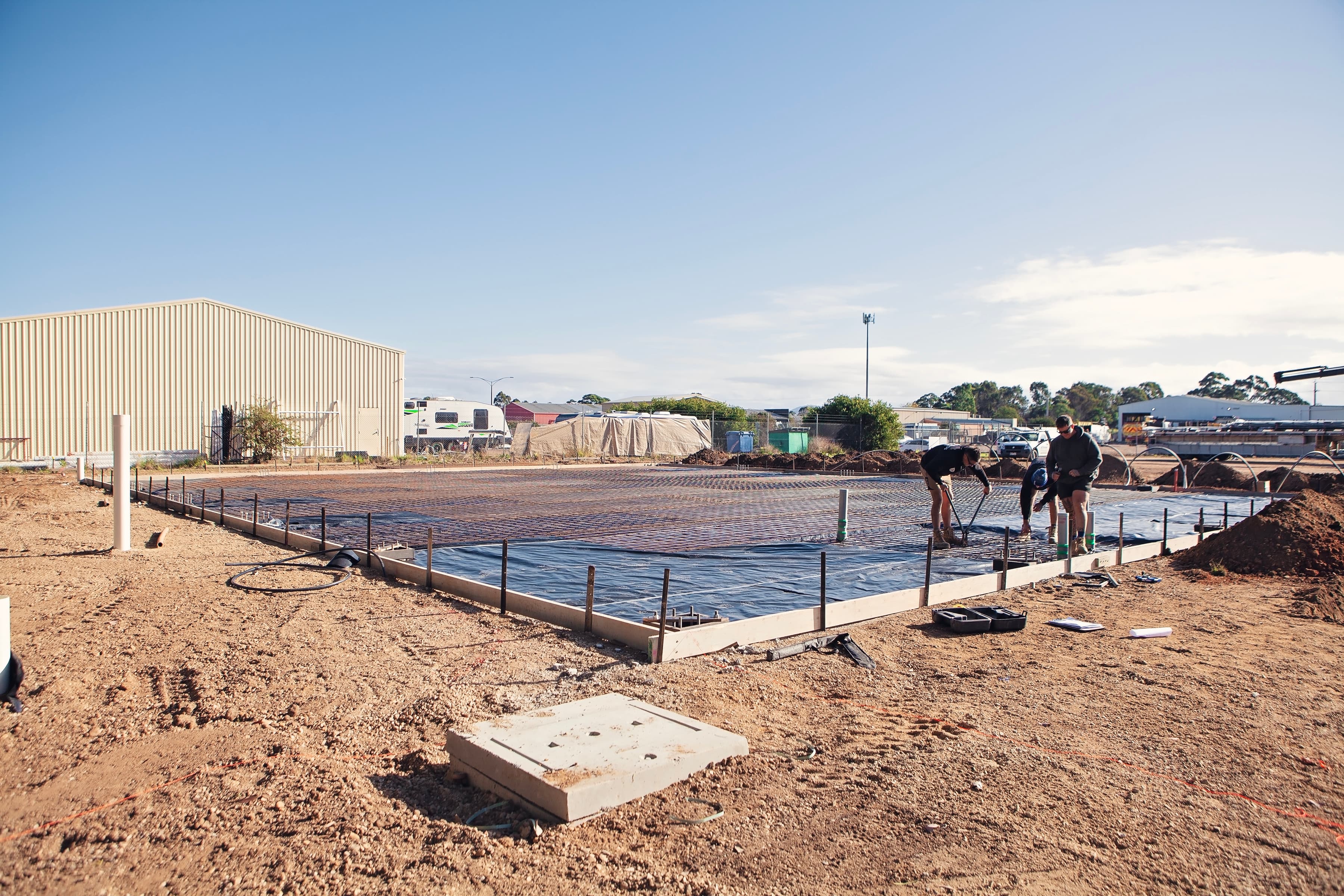
Formwork sets the shape, the levels and the joints. Reinforcement gets placed to the engineer’s drawing: bar sizes, spacing, cover and any extra steel under known load points. On commercial work this gets checked and, where the job calls for it, inspected before the pour. There’s no eyeballing it. It goes in as drawn.
Staged pours on large slabs
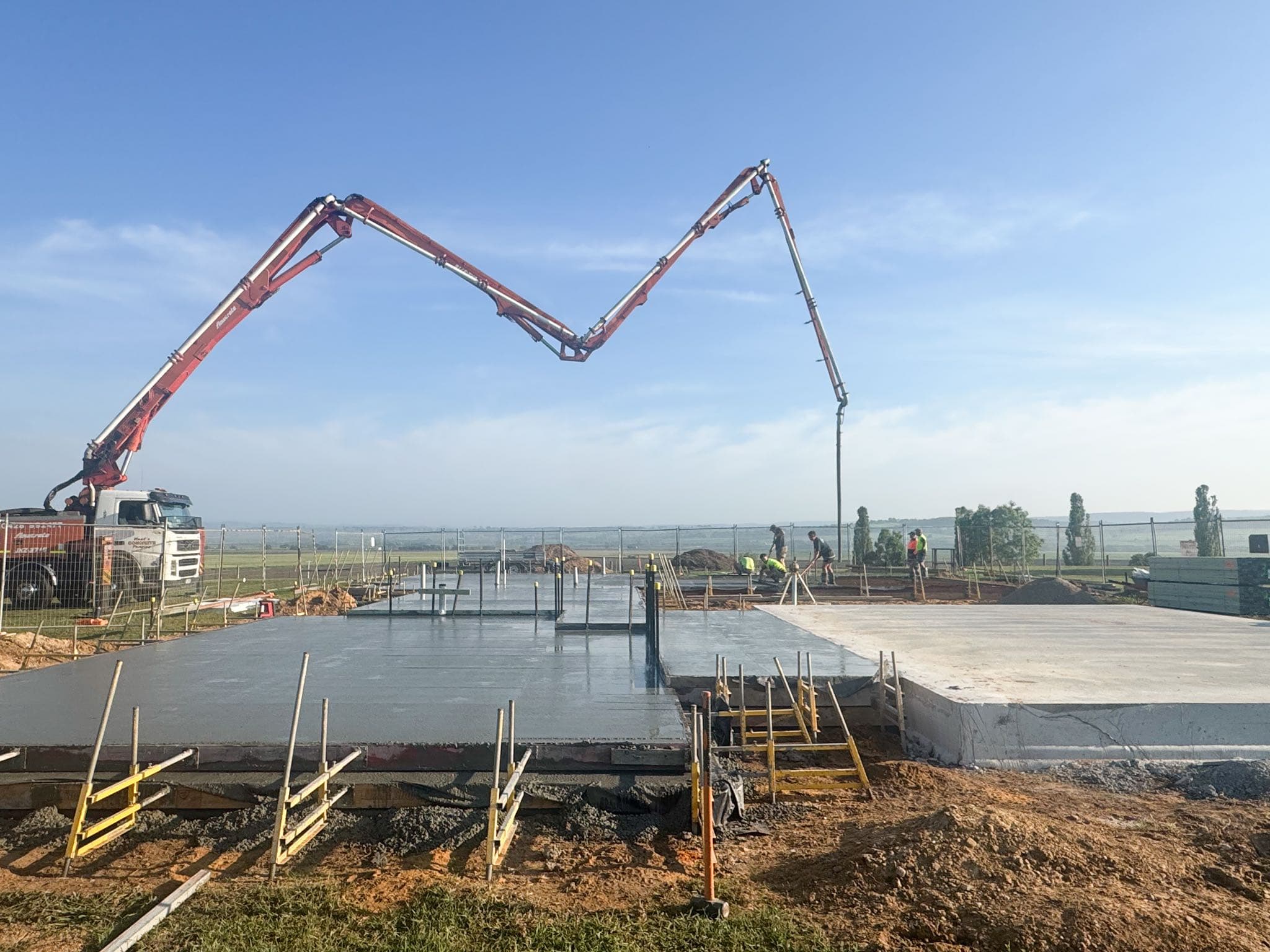
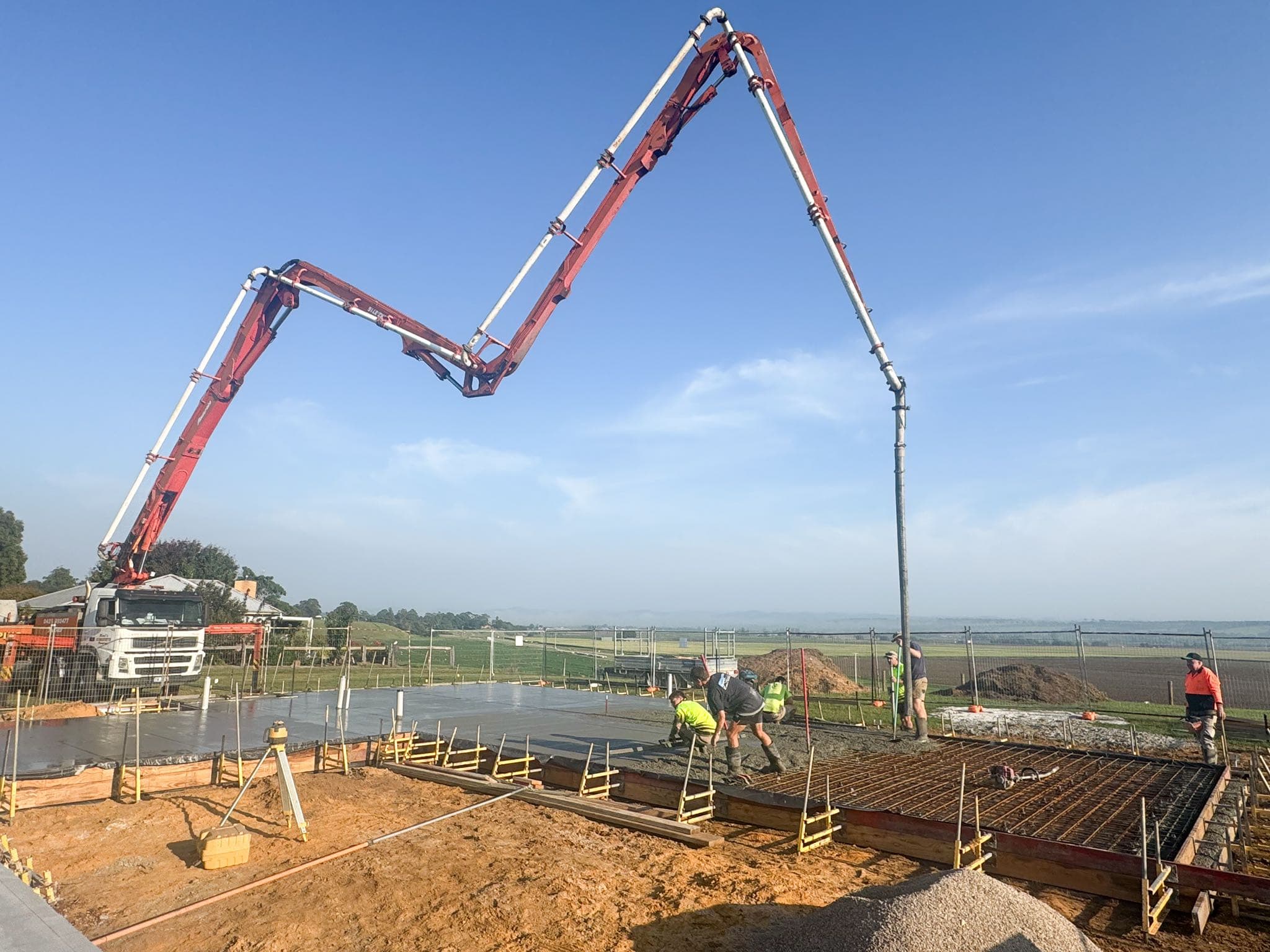
A large slab often can’t go down in one hit. It gets poured in planned stages, or bays, with the joints set out so the finished slab performs as one. That takes planned truck movements to keep each pour continuous, so the finish stays consistent across the whole area and you don’t get cold joints where you didn’t design them.
Finish and cure to tolerance
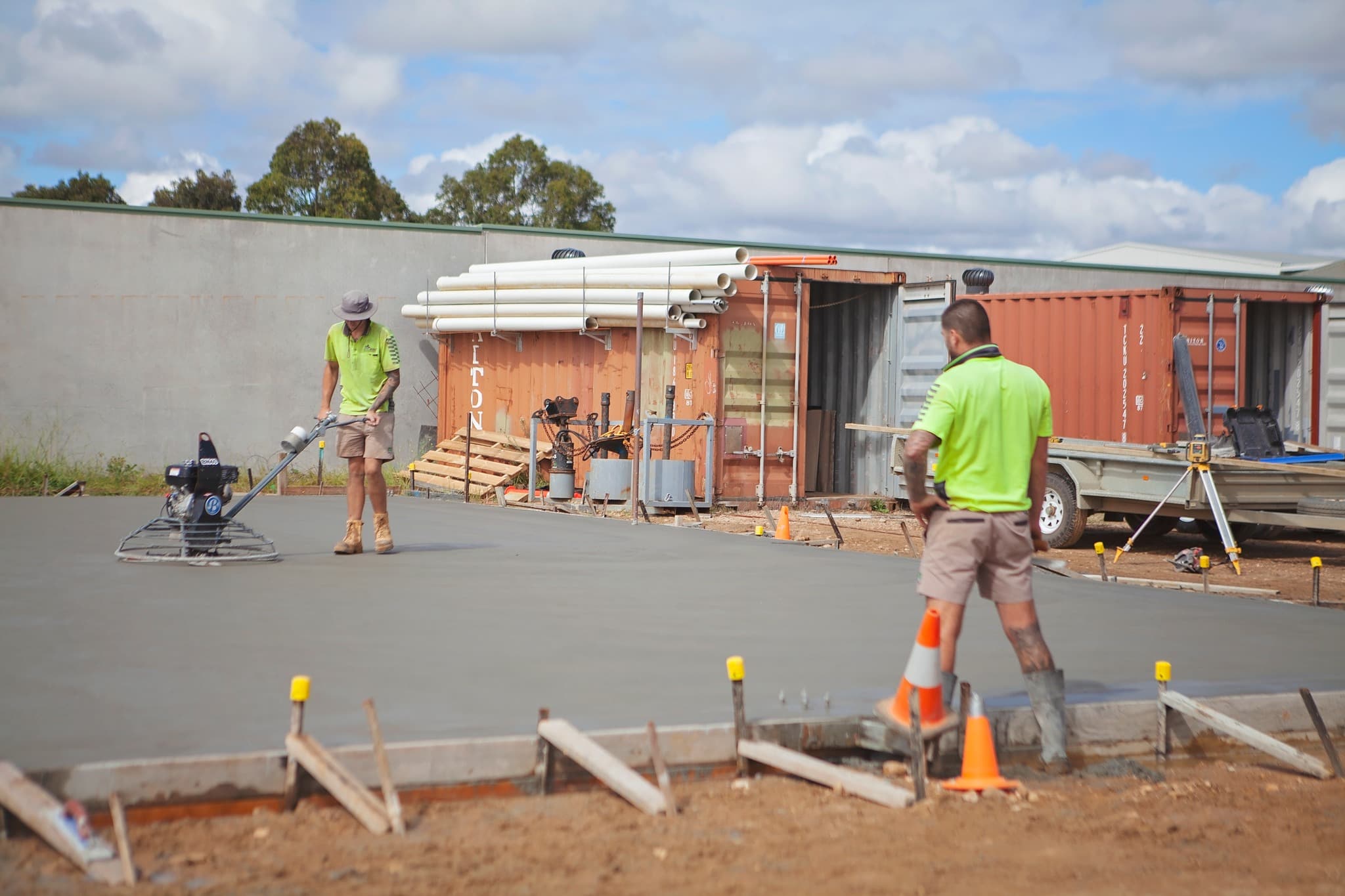
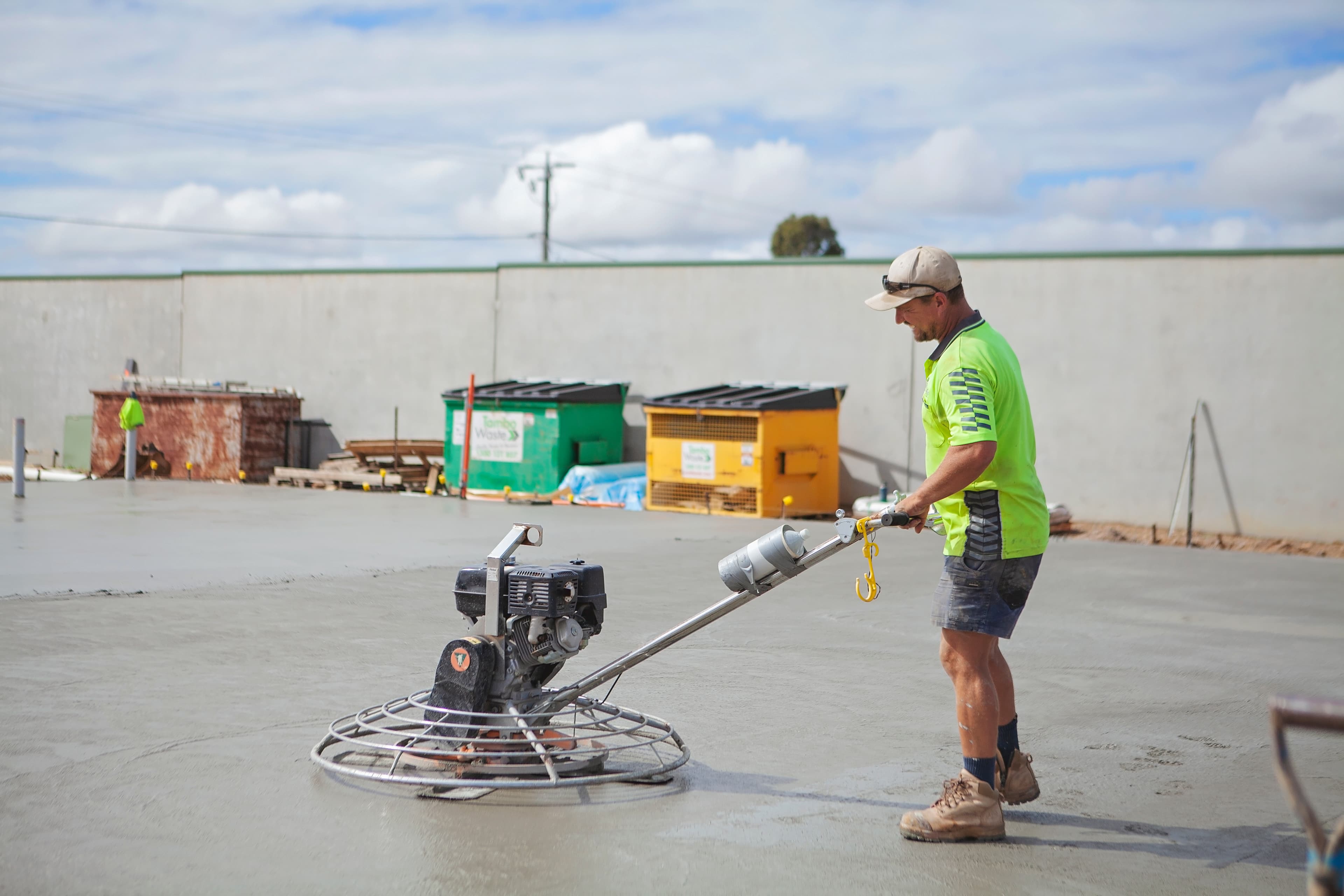
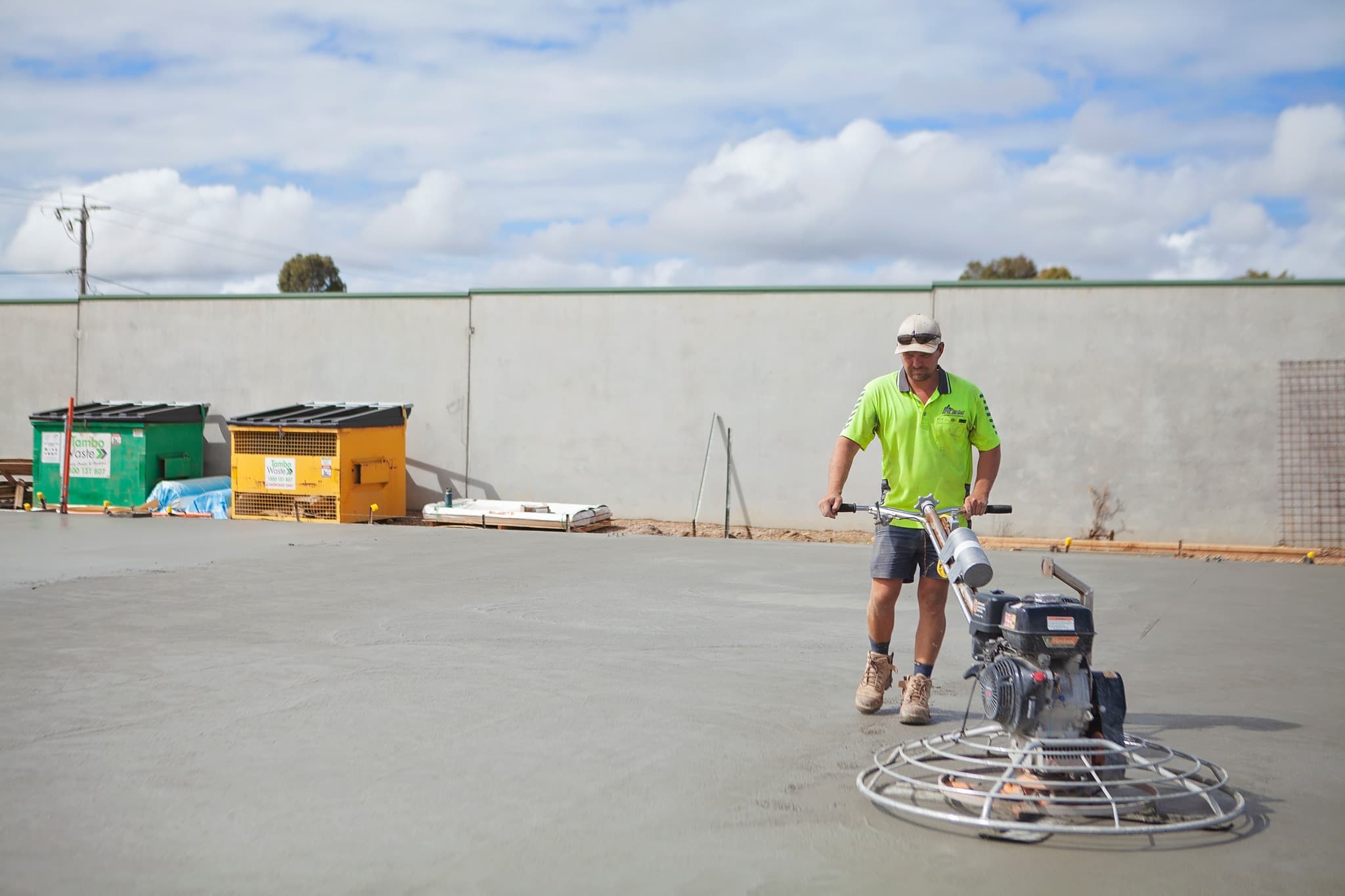
The finish is specified. A working yard might take a broom finish; an internal floor might need a power-trowelled surface to a set flatness tolerance. The cure is managed to protect the strength the design relies on, weather-planned, because we won’t pour a commercial slab into conditions that put the cure at risk. That holds for a mid-winter pour as much as a summer one.
The real jobs behind this
We have run this process on real commercial slabs across East Gippsland, and you can see them in our project case studies. Three worth pointing to:
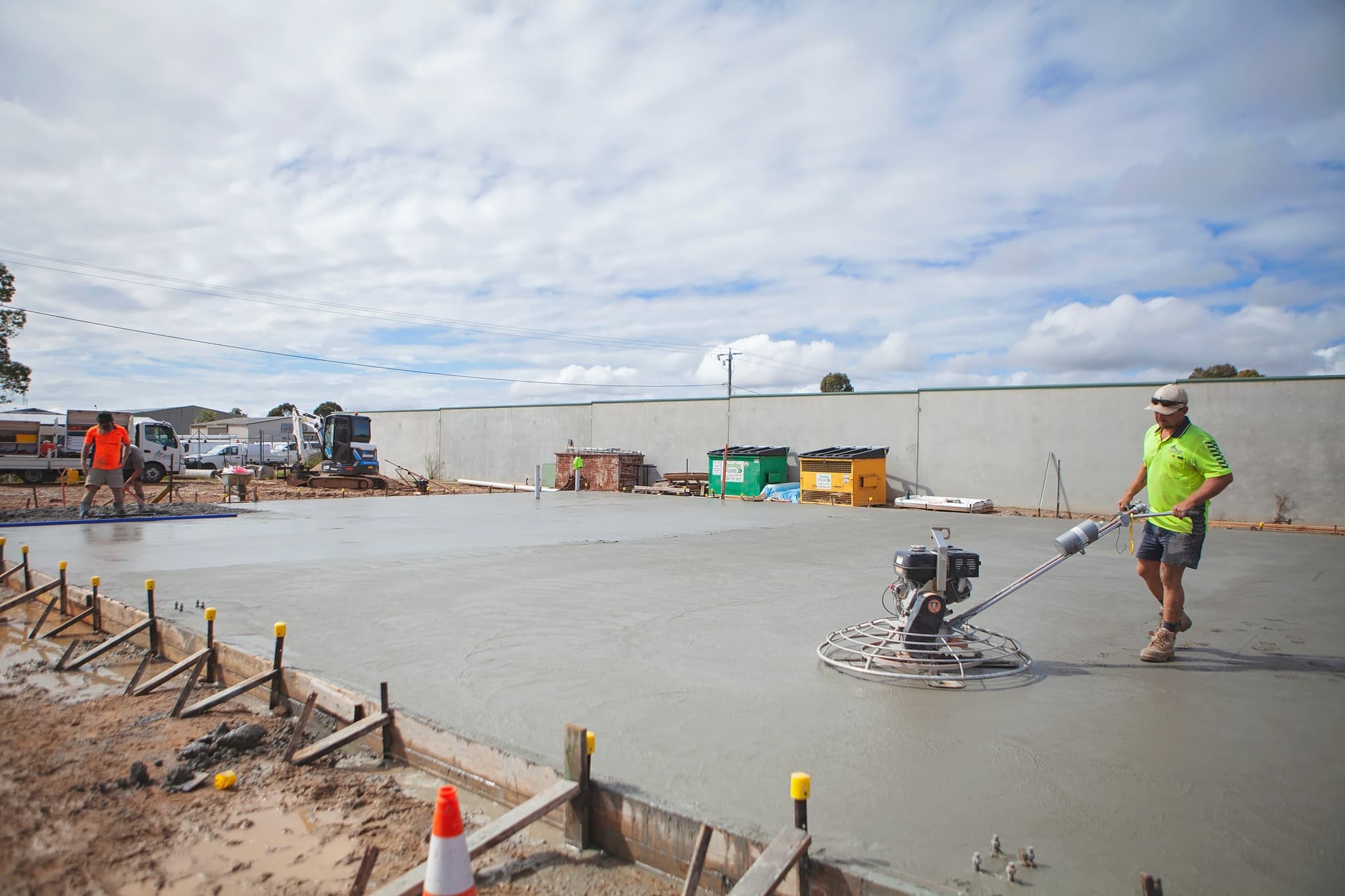
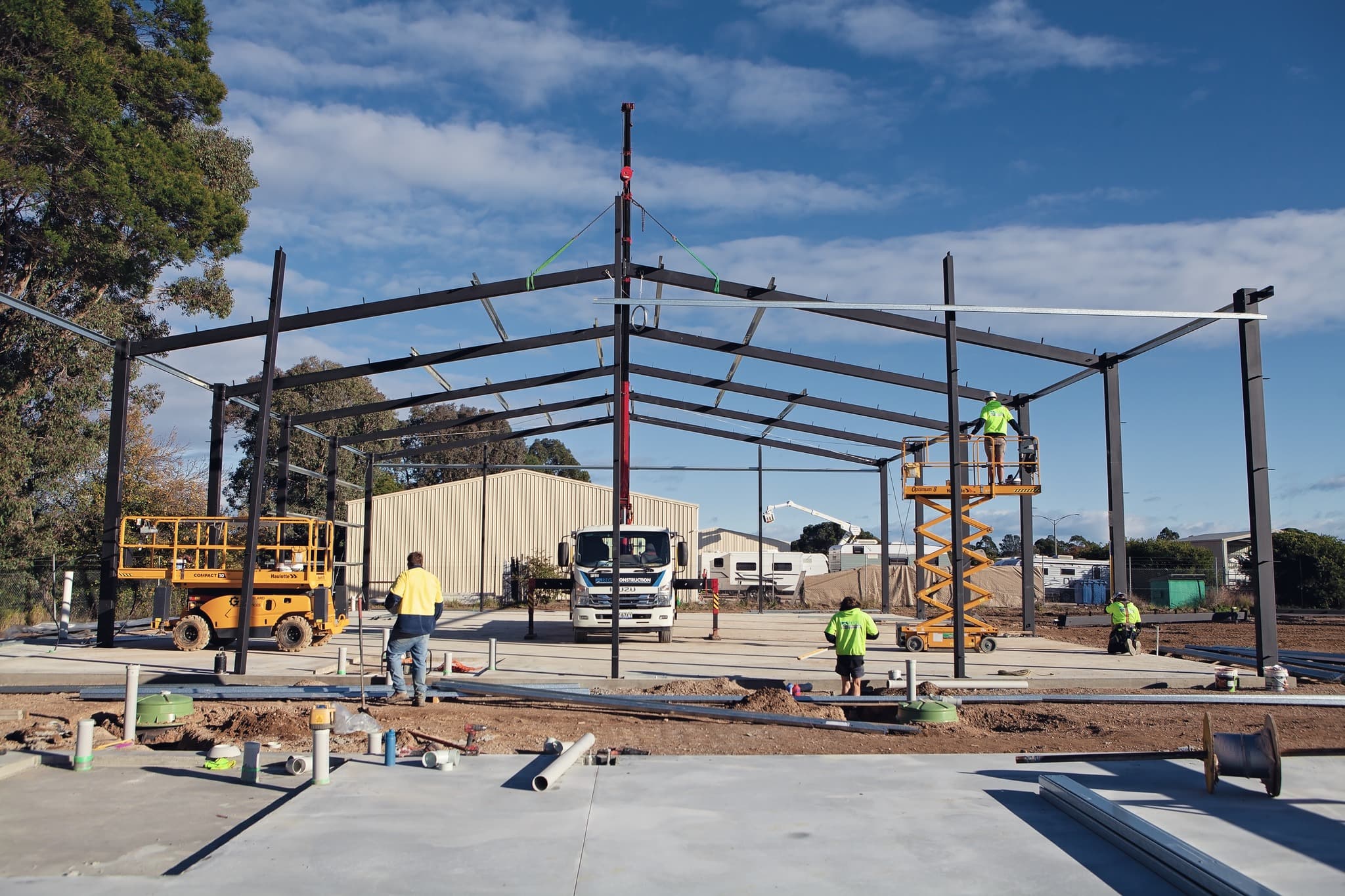
- RBM’s own Bairnsdale site (February 2025). We poured a commercial-grade slab on our own new Bairnsdale yard, sized and reinforced for a working industrial yard taking plant movements and stored materials. We treated it like any other commercial job: full site prep, base compaction, formwork, reinforcement and the pour, with records kept on each phase. It is now the base for day-to-day RBM operations, so we are standing on our own work every day.
- A large-format commercial slab in East Gippsland (February 2025). A big pour run start to finish by our team: set-out, reinforcement, pour, finish and cure, all in-house. The scale needed planned truck movements and staging to keep the pour continuous and the finish consistent across the full area.
- A commercial slab in Lucknow (June 2025). An industrial-grade slab poured mid-winter. Winter pours are fine when they are planned for, and this one was: base prep, reinforcement, a carefully programmed pour window, and a managed cure with cold-weather cover, with ambient conditions tracked through the critical hours after the pour. The finished slab is in day-to-day use and you can’t tell the month it went down.
These are not stock photos. They are our jobs, on the ground, in the shire.
Why one team on the dig and the pour keeps a program on track
On a commercial job, one team doing the excavation and the pour removes the handover gap that blows out programs. When the dig and the pour are two separate contractors, there are two quotes, two schedules and a seam in the middle where a level drifts, a service ends up in the wrong place, or the pad sits open through a week of rain waiting for the next crew.
We run our own excavation and our own pour. That means:
- One program. The dig and the pour are sequenced by the same team, so the pad is ready exactly when the slab needs it, not a fortnight later.
- One point of accountability. If a level is out or the base isn’t right, it is on us to fix, not a blame swap between two outfits while the builder waits.
- No re-work between trades. The pad gets cut to the height and standard our own slab crew needs, so nothing gets re-done at the seam.
On a builder’s program, where our slab is holding up the trades either side of us, that continuity is the difference between hitting the date and explaining why we missed it.
Get a quote
If you’ve got a commercial slab coming up, an industrial floor, a yard, a warehouse, get us in early with the drawings. We’ll read the spec, work out where the pour sits in your program, and give you a written quote off the design, not a guess. One team on the dig and the pour, engineered to spec, no surprises on pour day. Get a quote and bring the drawings.