A typical house slab runs about one to three weeks from site cut to a slab you can build on. The pour itself is one day. Prep and curing are what set the calendar, not the concrete. Reactive clay, wet-weather windows and inspection scheduling stretch it. One team on the dig and the pour keeps it tight.
Updated September 2026.
The concrete is the quick bit. Trucks turn up, the slab goes down in a day, and then you wait. What eats the calendar is everything either side of pour day: the dig, the steel, the inspection, and the cure before anyone stands on it. So when a builder asks how long the slab will take, the pour is rarely the honest answer.
Here is how a house slab actually runs in East Gippsland, stage by stage, and what pushes it out.
The stages, in order
A house slab is not one job. It is six or seven smaller ones that have to happen in sequence, each depending on the one before it.
- Site assessment and set-out. We walk the block, read the soil report and the engineer’s plan, and mark out where the slab sits. On reactive clay around Bairnsdale and Lindenow this step decides the footing depth, so it earns its time.
- Excavation and site cut. We level the block, strip topsoil and organic material, and cut in on a slope. This is where our excavation service and the slab crew are the same team, so there is no handover gap.
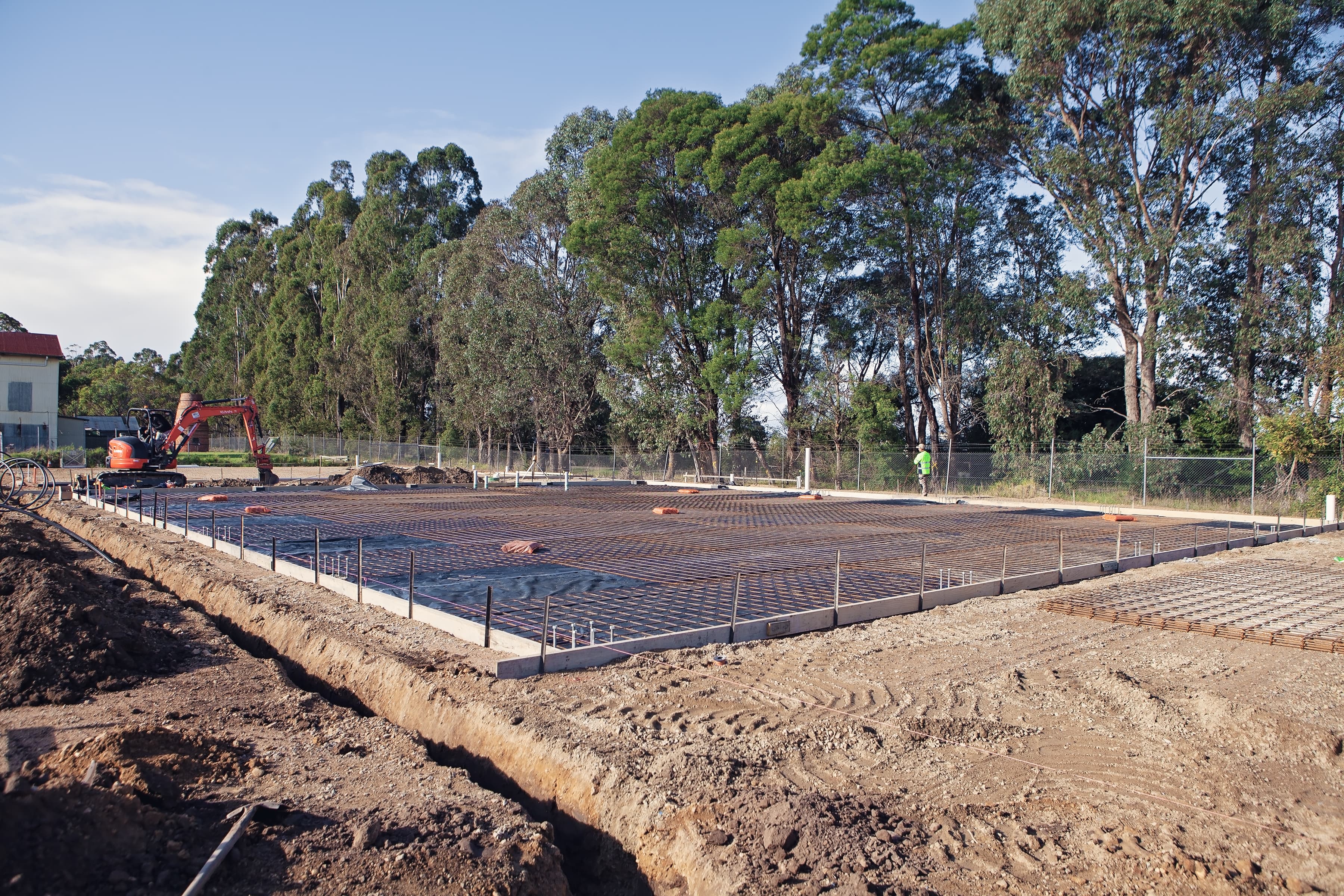
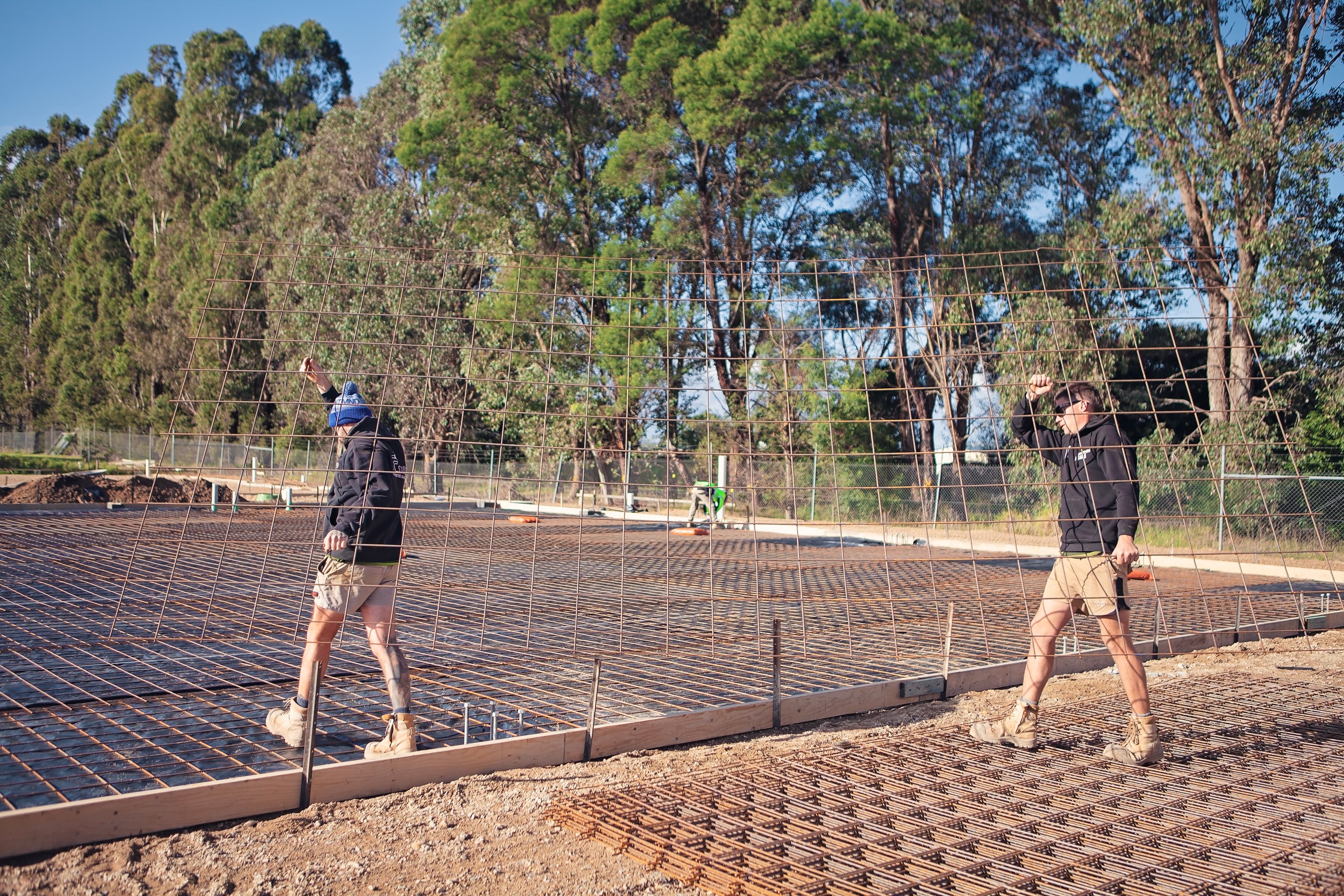
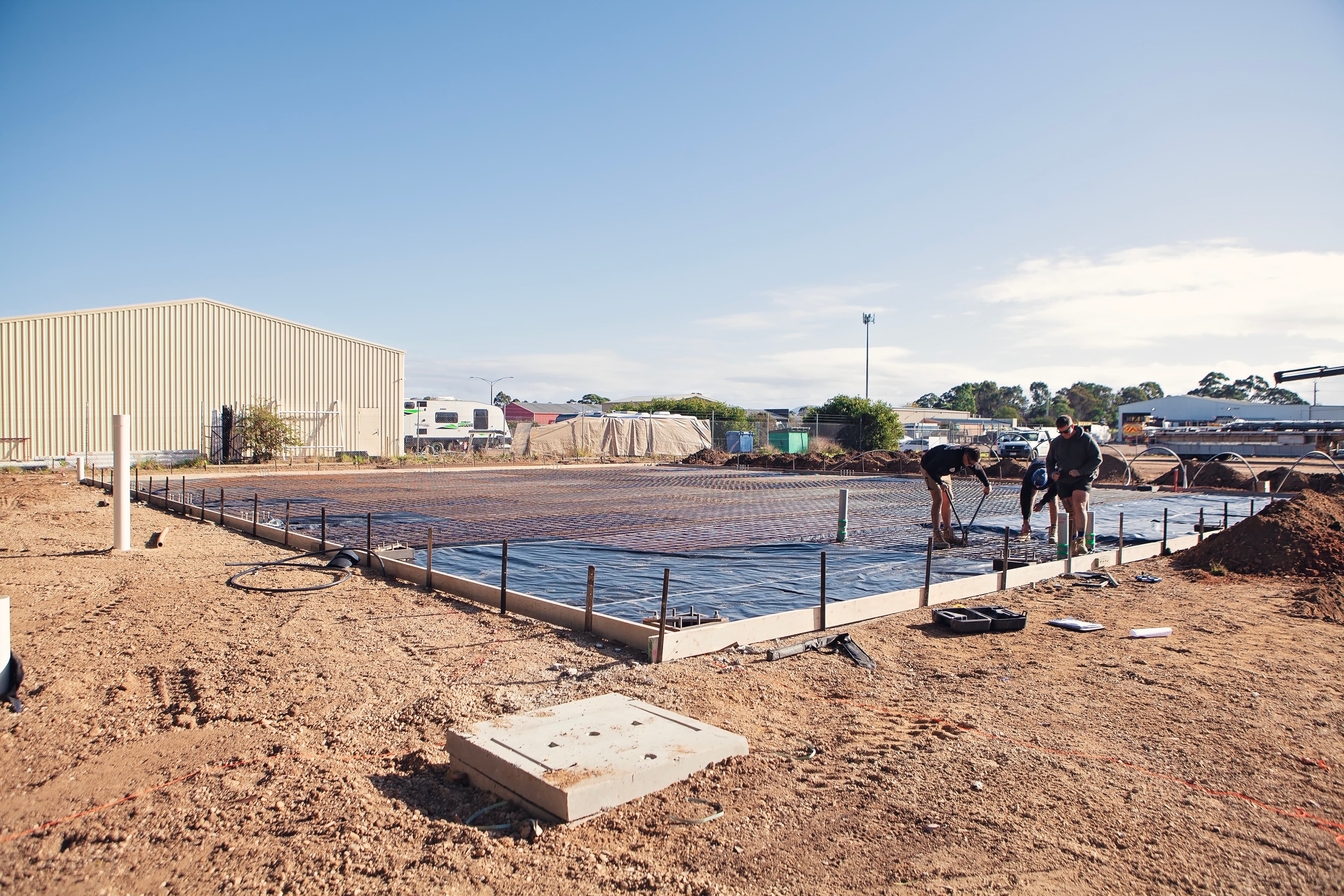
- Formwork and steel. Edge forms go up, then reinforcement to the engineer’s spec: mesh, bar, footing cages, waffle pods or a stiffened raft.
- Plumbing rough-in coordination. The plumber sets the under-slab drainage and penetrations before the pour. We program around their day, not against it.
- Inspection. The building surveyor or engineer signs off the steel and set-out before any concrete goes in. That booking is often the single biggest variable in the whole timeline.
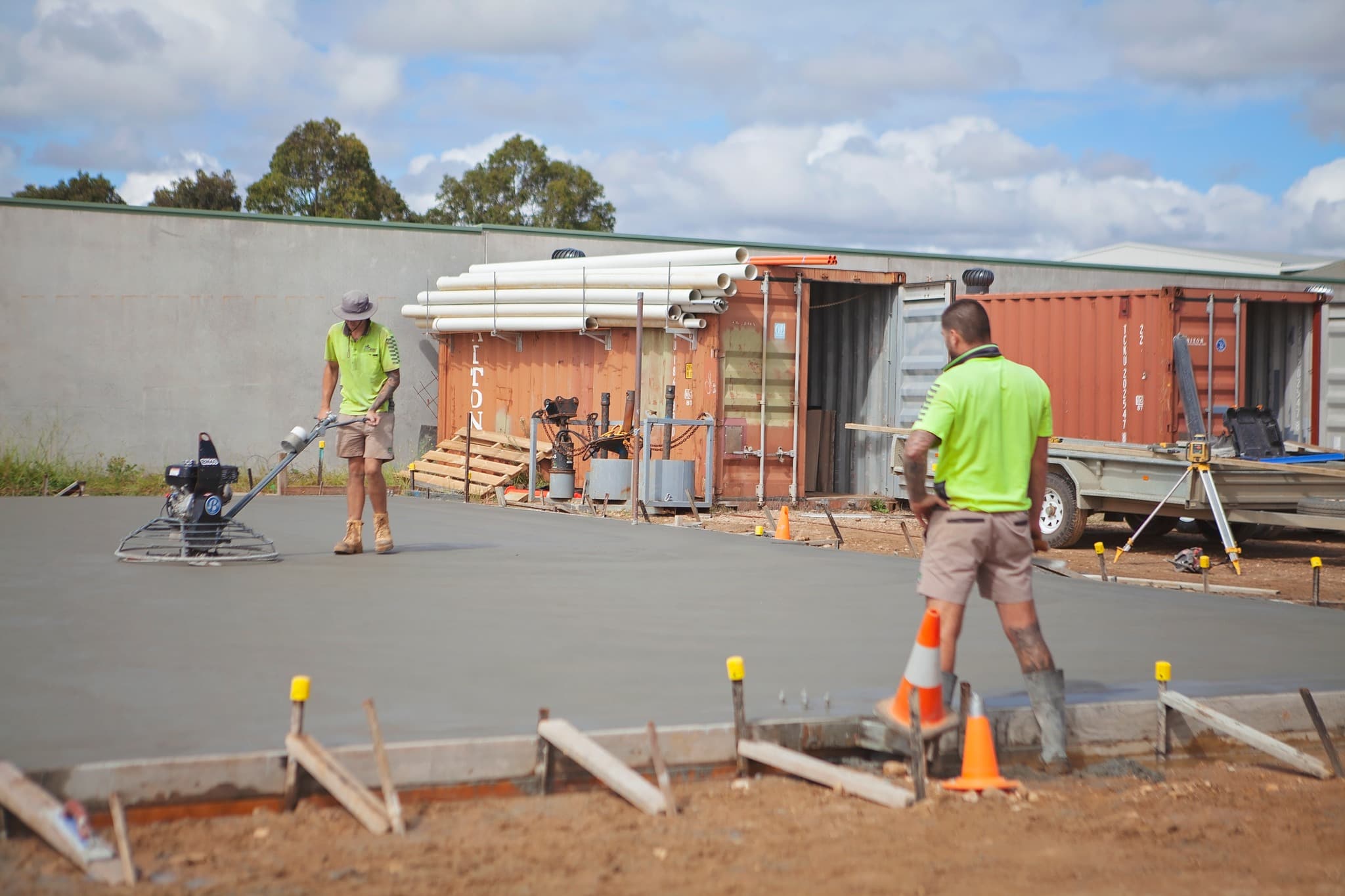
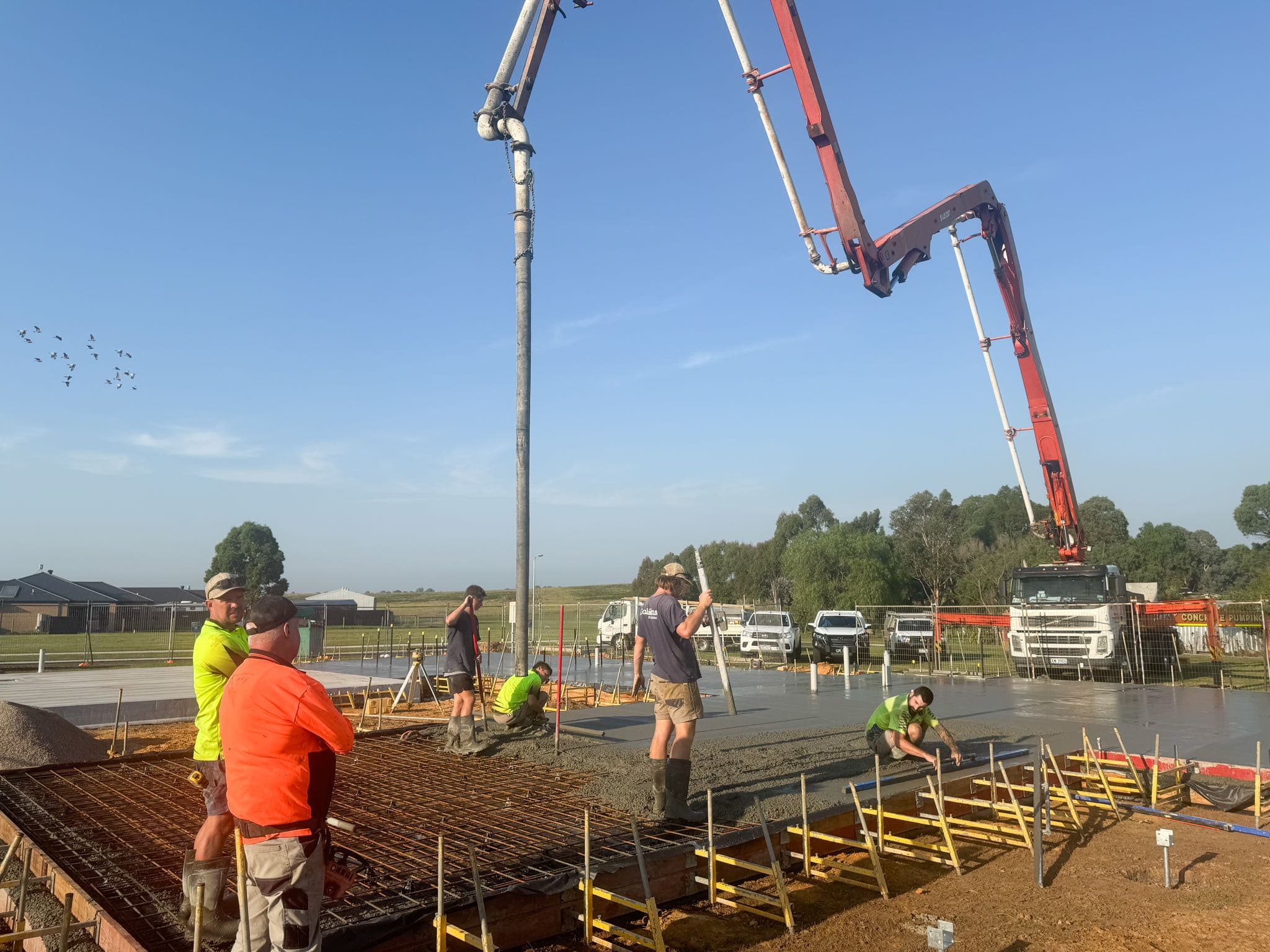
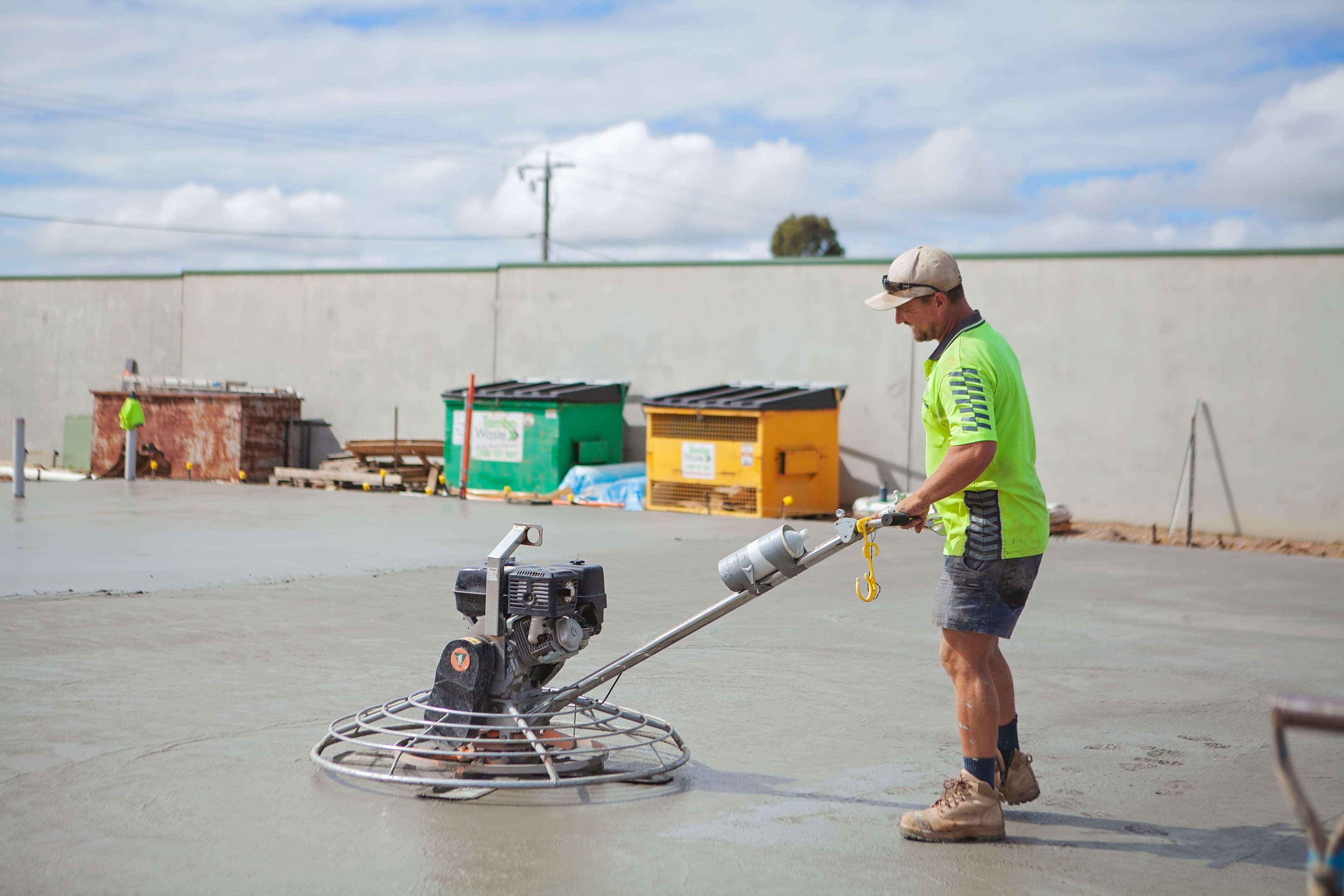
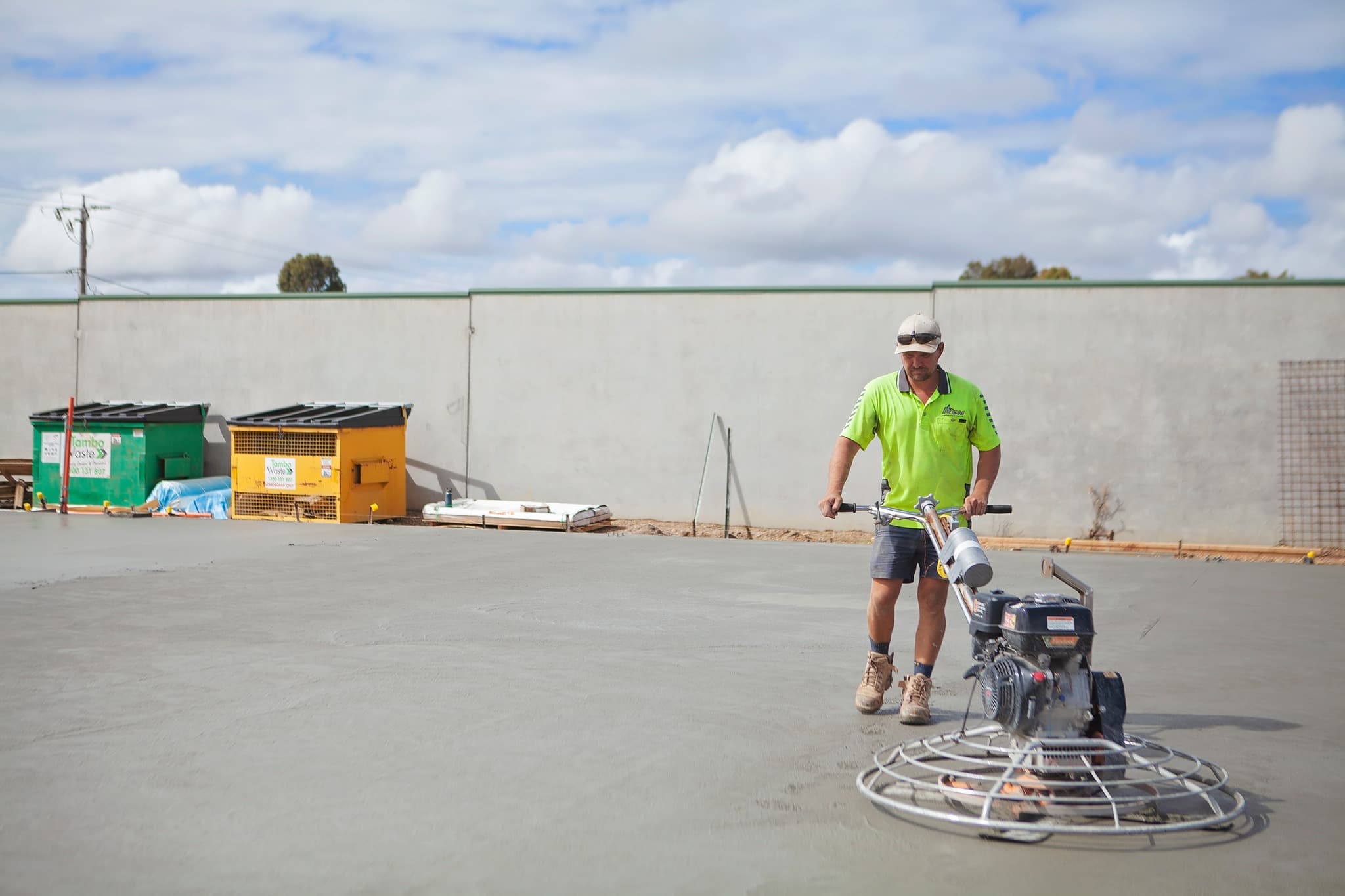
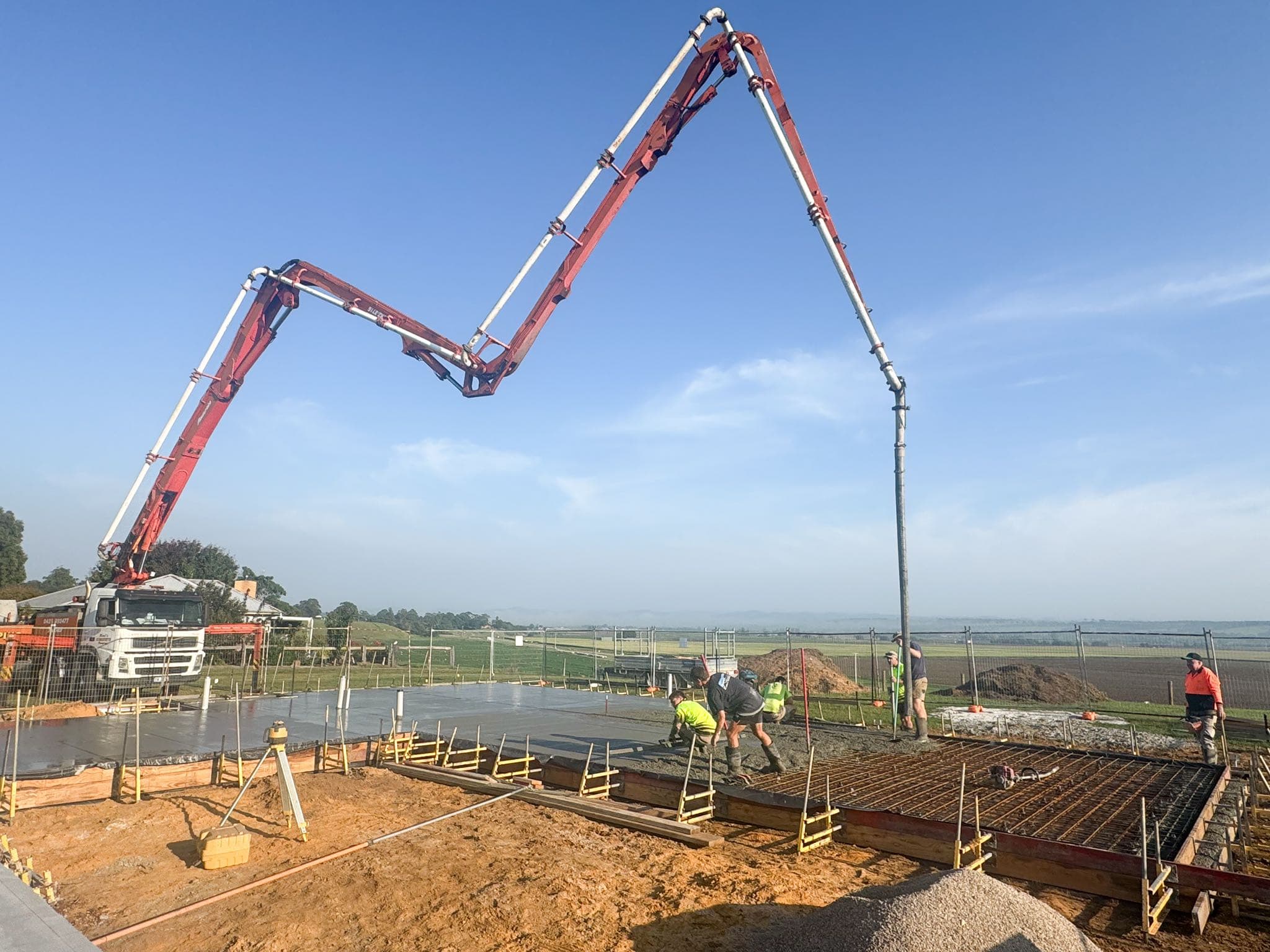
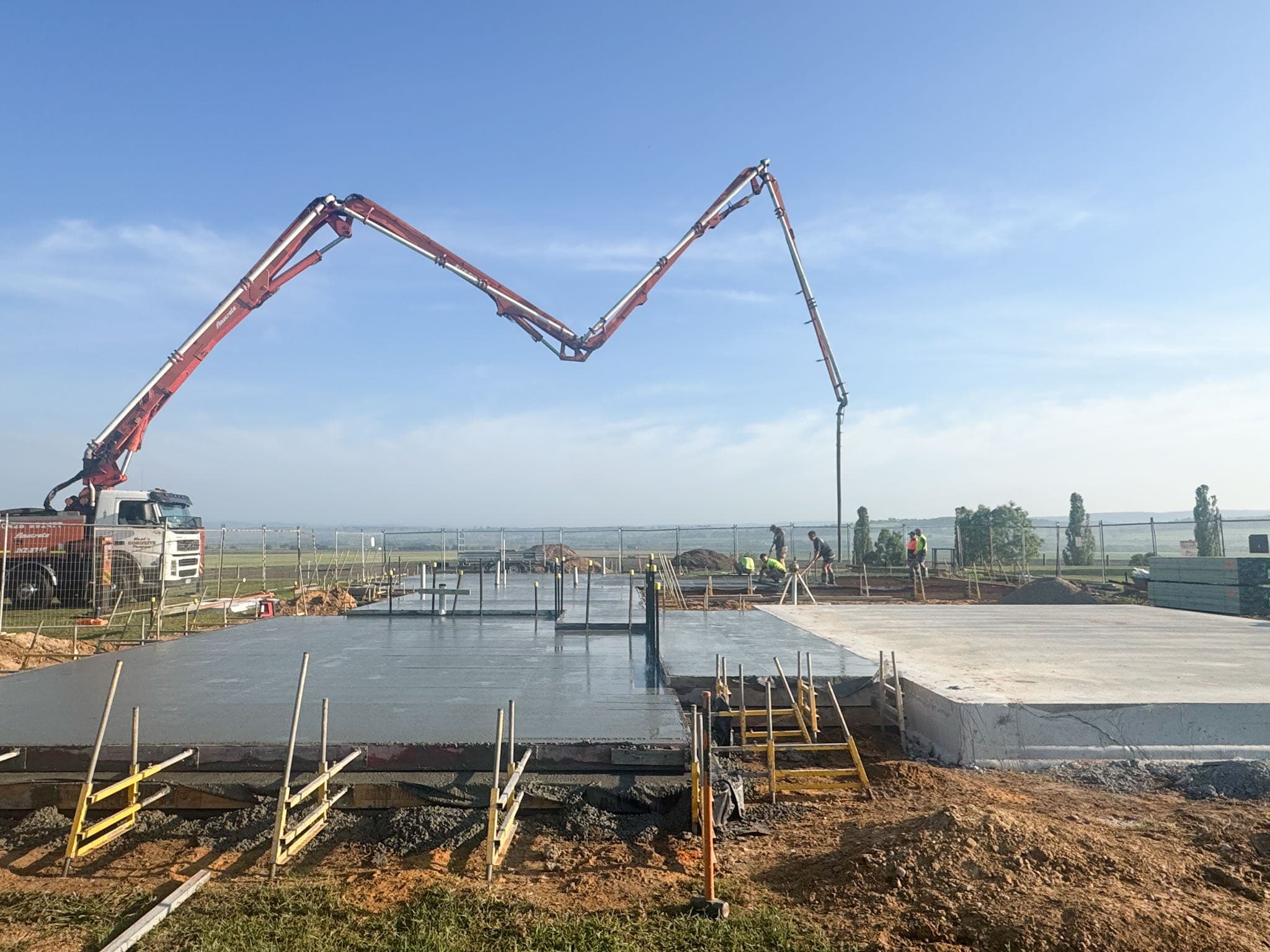
- Pour day. One day. Trucks, place, screed, finish. On a standard house slab this is a single continuous pour.
- Curing before load. The slab keeps gaining strength for weeks. When the builder can stand a frame on it comes down to the cure, covered below.
The pour is one day. The cure is not
Concrete is usable long before it is fully strong. A house slab is generally firm enough to walk on within 24 to 48 hours, ready for the frame at around seven days, and at full design strength at 28 days. Those are the numbers that matter when a builder asks when they can start.
The reaction that hardens concrete keeps going the whole time. At seven days a properly cured slab is at roughly 75 percent of its 28-day strength, which is why most builders frame at a week rather than waiting a month. We confirm the load-ready date in writing as part of the job program so nobody guesses. If your slab is decorative or exposed, hold off on heavy loads and sealing longer. Early loading is a common trigger, and what causes concrete to crack usually comes back to curing, ground prep and reinforcement.
What stretches the timeline in East Gippsland
The one-to-three-week band is real, but the top of it is where local conditions land.
- Reactive clay prep. Plenty of inland blocks around Bairnsdale and Lindenow carry reactive soil. It needs deeper footings, articulation and careful compaction, all of which add days to the dig and steel stages, not the pour.
- Wet-weather windows. We will not pour into rain or a saturated sub-base. On a wet spring week we book the pour to a forecast window and hold, rather than pour into conditions that hurt the finish.
- Engineer and inspection scheduling. The steel inspection has to happen before the pour, and inspectors book out. In a busy building season this is often what adds a week, not anything on our end.
- Access and pump. A tight or steep block near Lakes Entrance or Paynesville that needs a concrete pump adds coordination on pour day, though not usually days to the program.
Why one team on the dig and the pour saves days
When the excavator and the concreter are two different businesses, there is a handover in the middle. The dig finishes, the site sits, the concreter comes to look, and dates get renegotiated. That gap is dead time, and it is where jobs slip.
We do the excavation and the slab with one crew, on our own machinery, off one program. When the site cut is done we roll into formwork and steel without waiting for a second contractor to fit us into their diary. That is one of the real reasons our house slabs come in on the timeline we quote, not two weeks past it.
So what does a realistic program look like?
For a standard house slab on a reasonable block: site cut and prep over a few days, steel and forms a couple more, inspection booked in, pour on the day, then the cure clock starts. Call it one to two weeks of active work plus the cure before the frame goes on. A reactive-clay or sloping block, or a run of wet weather, pushes toward the three-week end.
We put the actual stages and dates in writing after we’ve seen your block, so you’re planning the build around a real program, not a rule of thumb. Get a quote and we’ll map the timeline to your site.