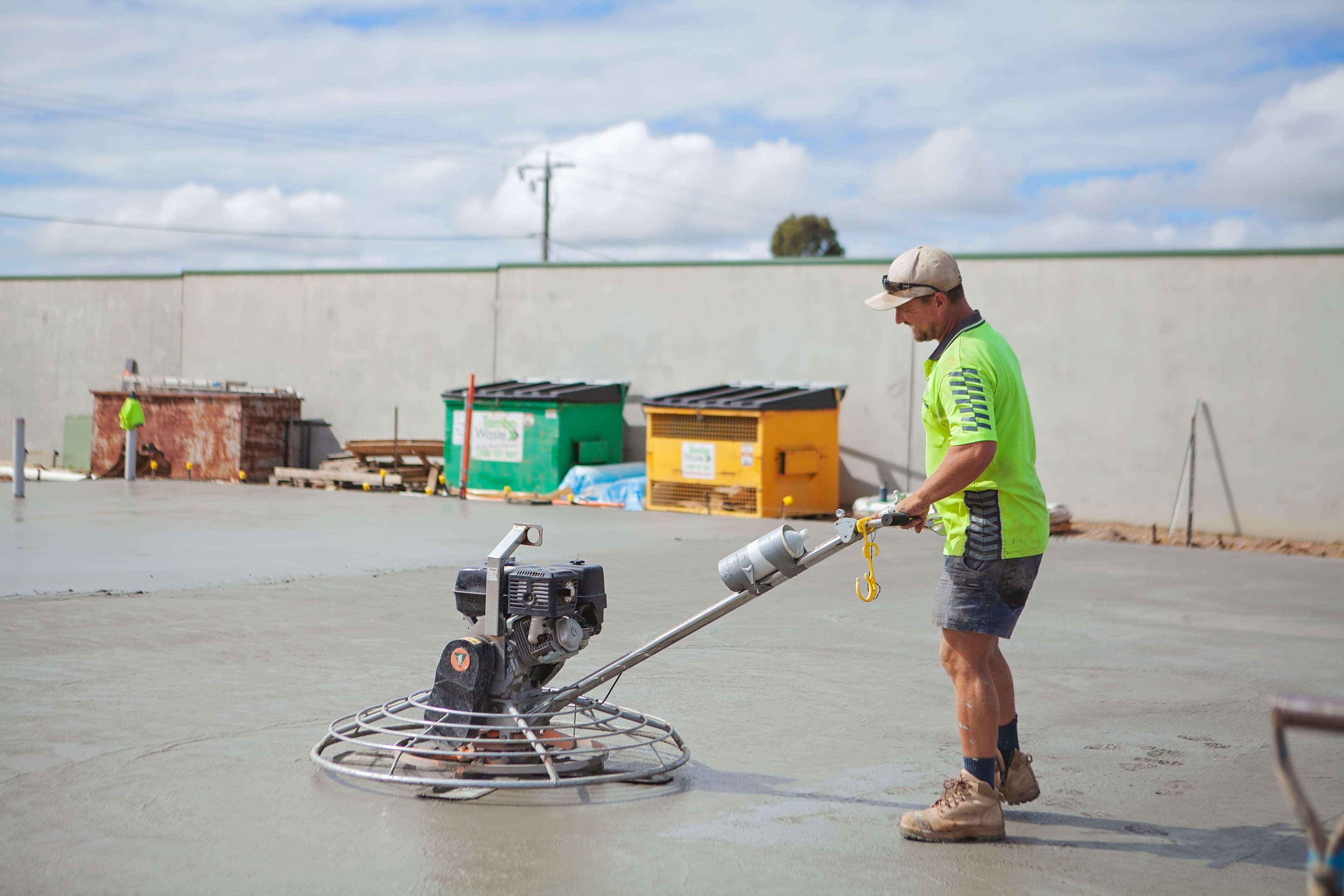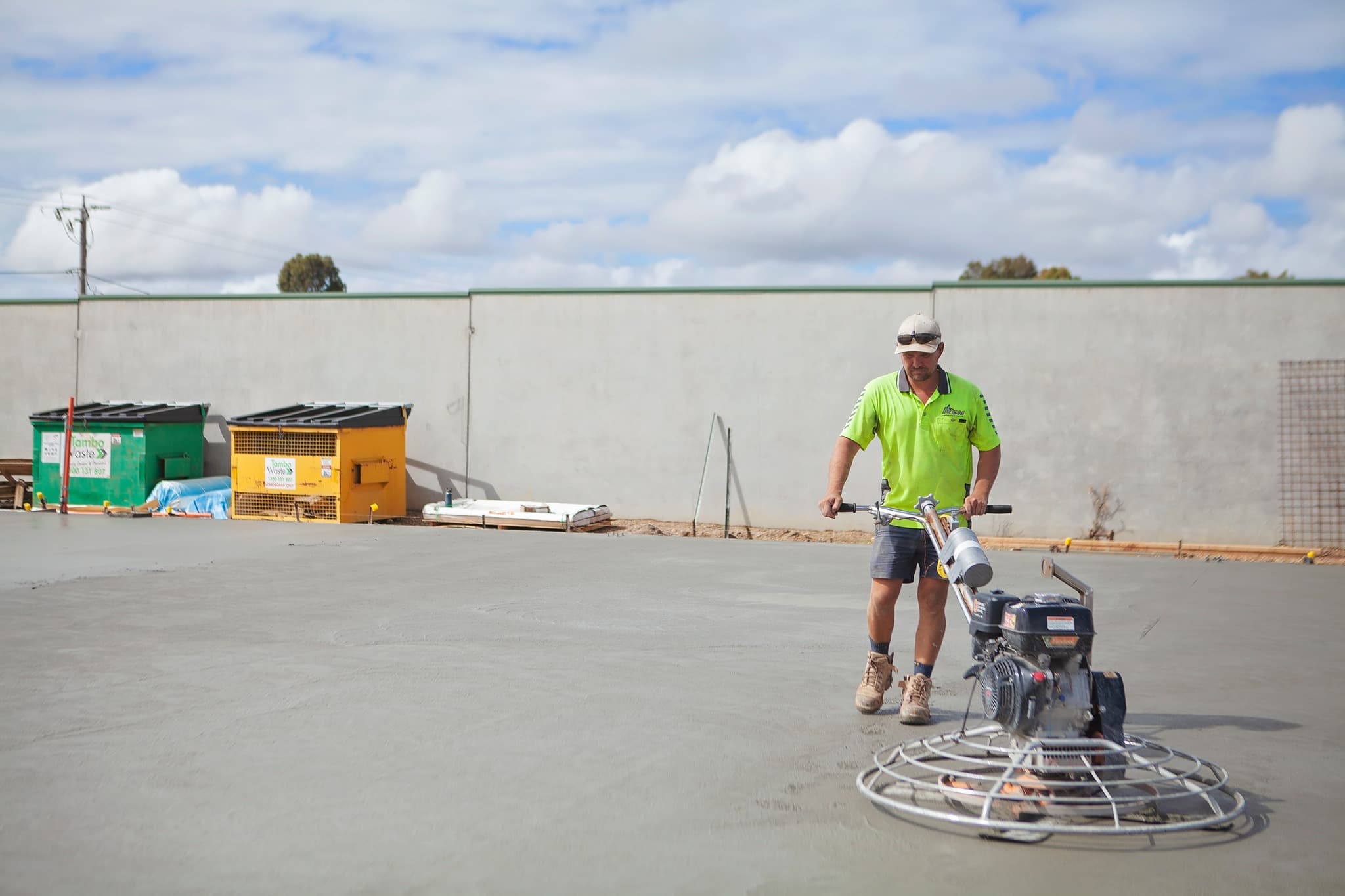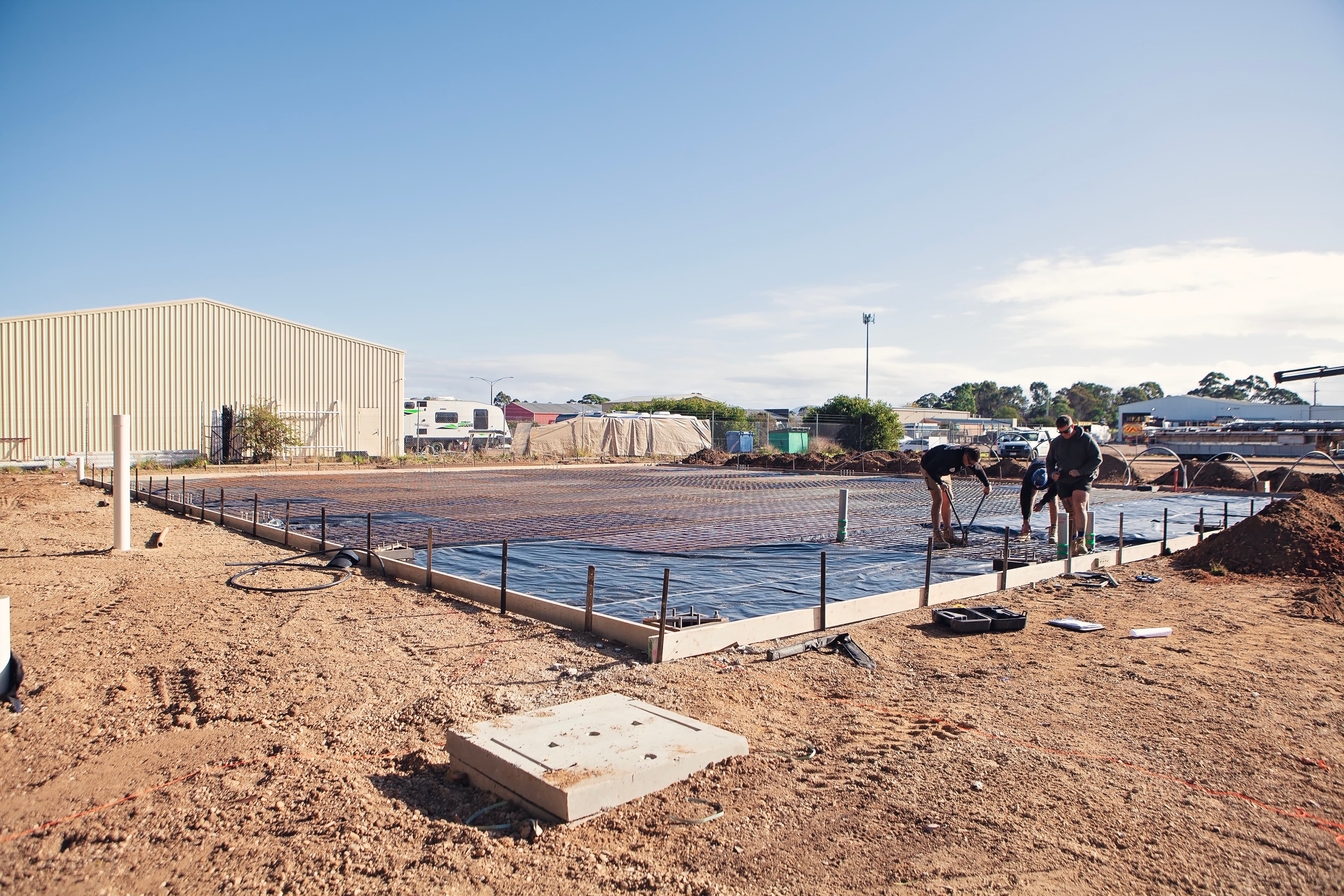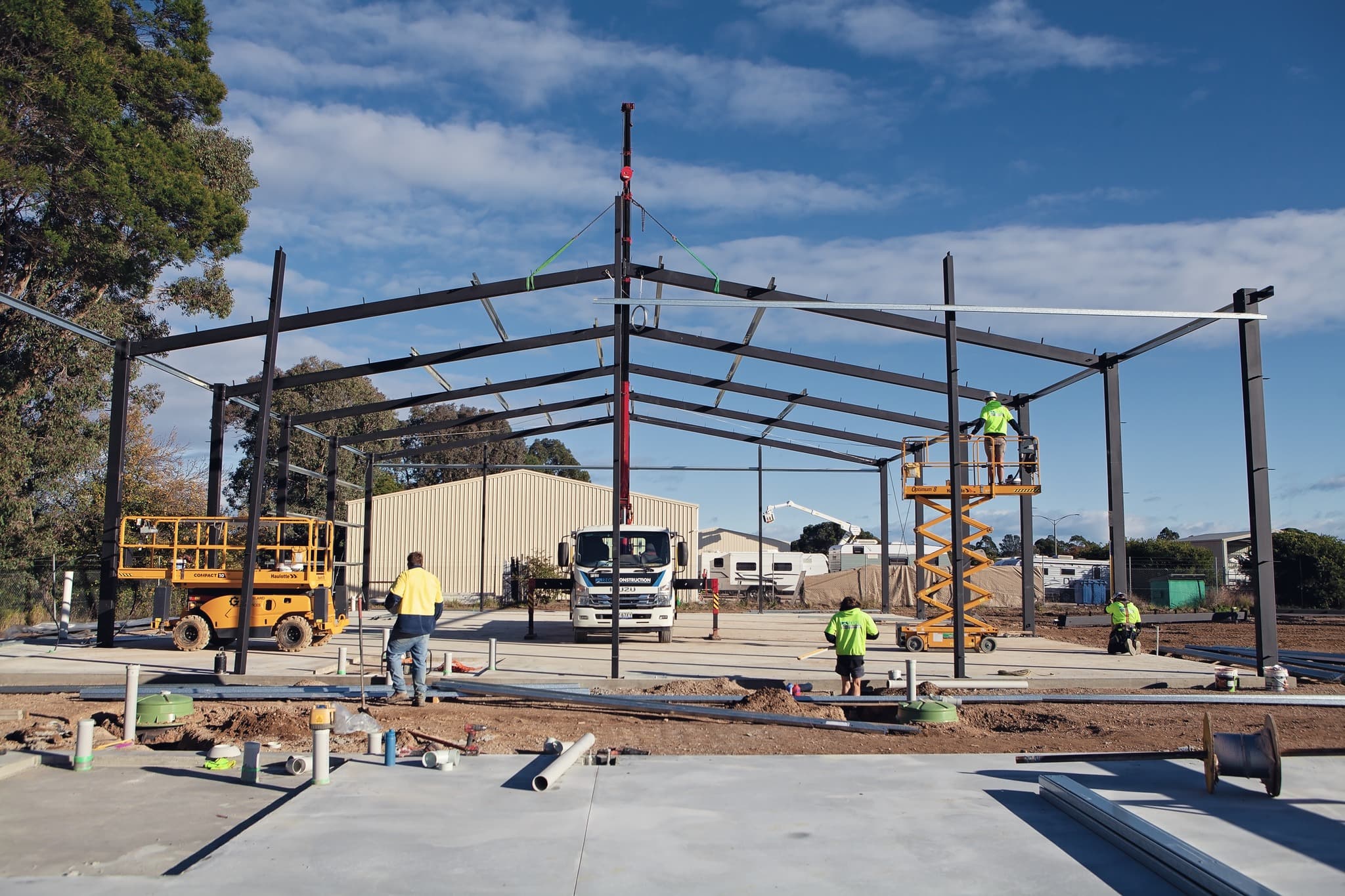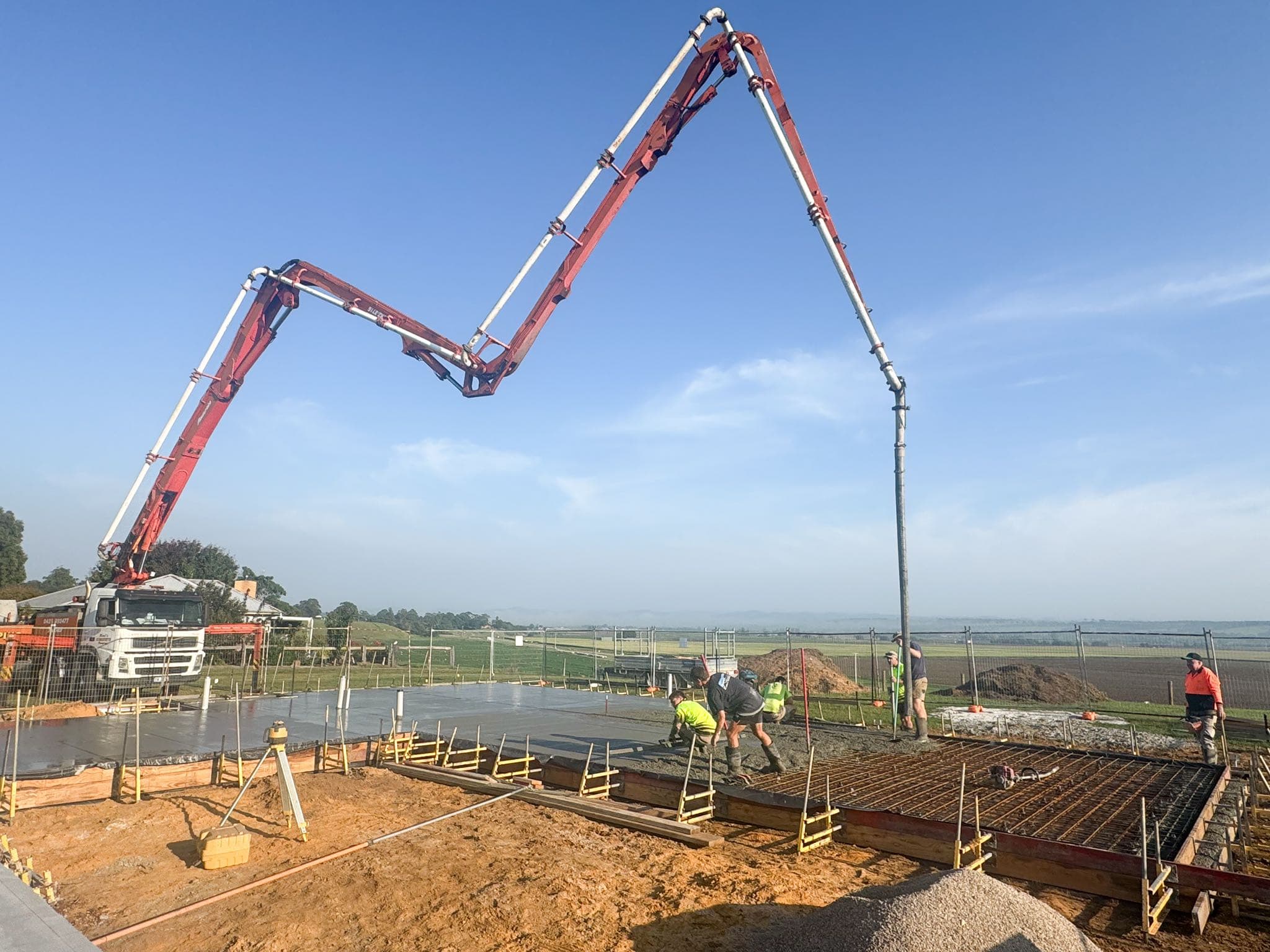
Almost every slab needs some excavation first. A site cut levels a sloping or uneven block, strips the topsoil and organic material that would rot and move under the slab, and gets you down to stable ground the engineer will sign off on. Skipping or skimping on it is where cracked slabs start.
Updated September 2026.
Stand on a flat-looking backyard and it’s easy to think the dirt is already good to go. Nearly always it isn’t. What looks level to the eye is rarely level to a laser, and the top layer of any block in East Gippsland is soft, living ground a slab can’t sit on.
Here is what a site cut is, why it matters, and what changes the dig on the blocks we work around Bairnsdale and the wider shire.
What a site cut actually is
A site cut is the excavation that gets your block ready to build on. It levels the ground, removes what shouldn’t be under a slab, and leaves a compacted, stable pad at the right height for the engineer’s design.
On most jobs that means three things happening together:
- Stripping the topsoil. The top 100 to 300mm of most blocks is organic: grass roots, old garden beds, soft loam. It holds moisture and it breaks down over time. Leave it under a slab and the slab settles unevenly as that material rots and compresses. It has to come off.
- Cutting to level. Almost no block is flat. We cut the high side down and, where needed, build the low side up with engineered fill so the whole pad sits at one height. On a sloping block that is a cut-and-fill job, and the steeper the fall the more there is to move.
- Compacting the base. Once we are at level, the pad gets compacted in layers so it doesn’t settle later. A base that isn’t compacted properly is a slab that cracks later, no matter how good the concrete is.
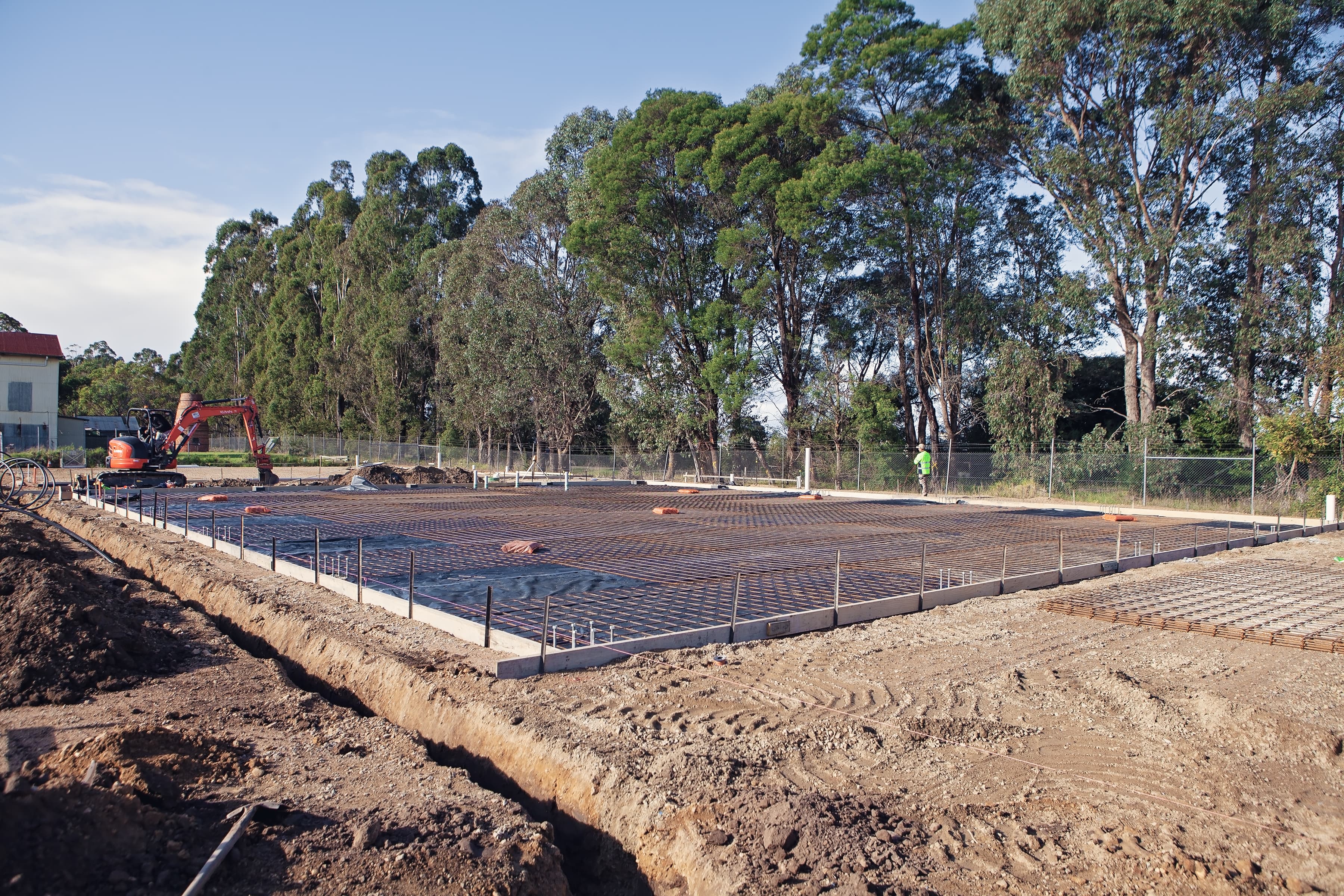
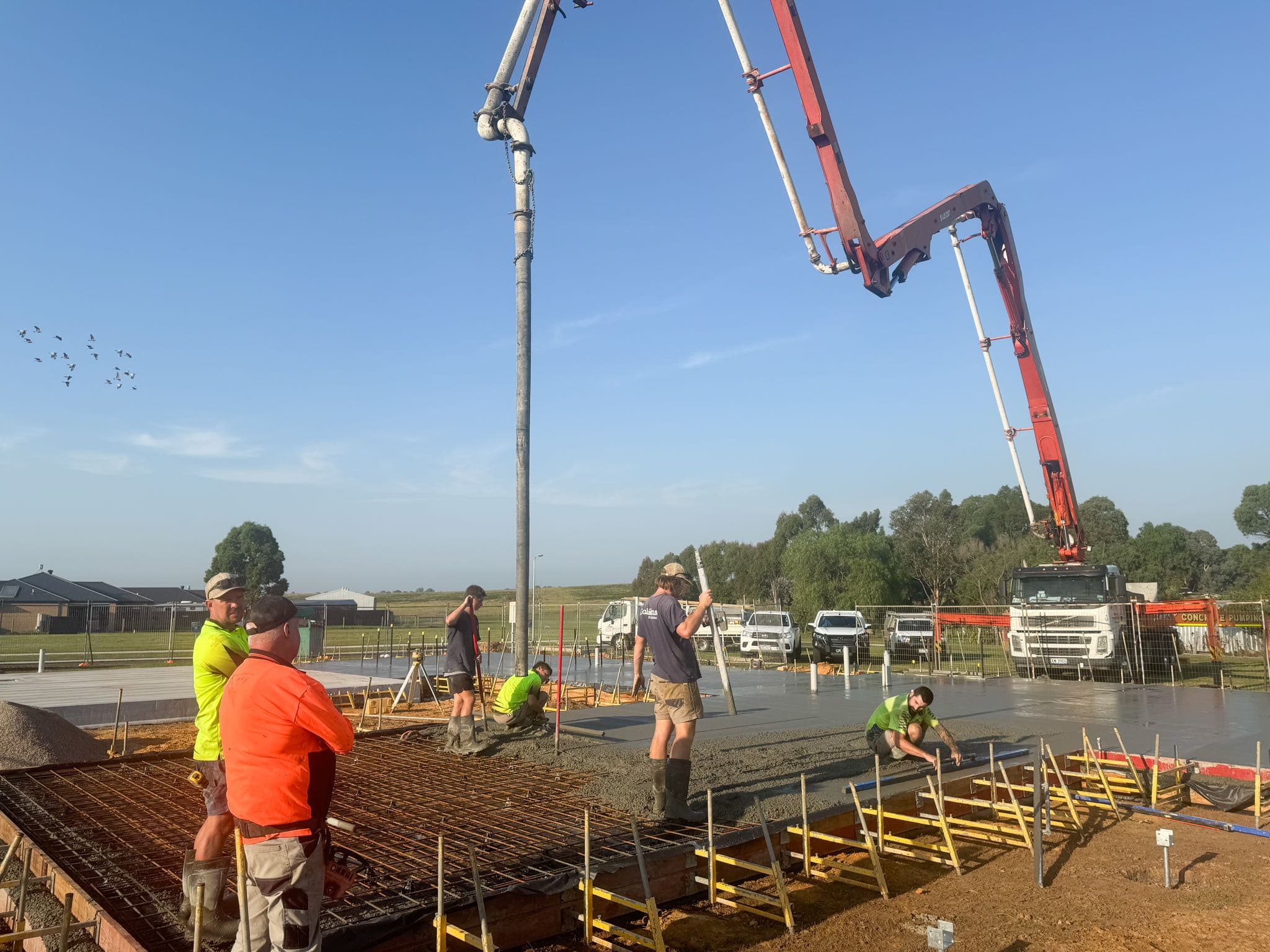
The finished result is a firm, level, clean pad ready for formwork, steel and the pour. Our excavation service handles this end of the job, and our house slabs service picks up straight after.
Why you can’t just pour on the dirt
You can’t pour on the existing ground because the top layer moves and the base under it is rarely stable or level. A slab is only as good as what it sits on. Get the ground wrong and the concrete has no chance.
Three things go wrong when the site cut is skipped or rushed:
- Organic material breaks down. Topsoil, roots and buried timber all rot. As they do, the ground under the slab drops in patches and the slab cracks or dishes to follow it.
- Uneven fill settles. Loose fill that hasn’t been compacted in layers keeps compacting under the weight of the slab and whatever you build on it. That settlement isn’t even, so the slab flexes and splits.
- Water gets trapped. A poorly cut pad can hold water against the underside of the slab. On reactive ground that swelling and drying is exactly what lifts and cracks a slab over the years.
None of this shows up on pour day. It shows up in year two or three, and by then it is an expensive fix, not a cheap prevention.
What changes the dig in East Gippsland
The two things that move a site cut around here are the fall on the block and what’s under the topsoil. Reactive clay and rock are both common inland, and both change how much work the dig is.
- Reactive clay is common across Bairnsdale, Lindenow and the surrounding towns. It swells when wet and shrinks when dry. The engineer’s footing design accounts for it, but the site cut has to get you to consistent, stable clay first, not a mix of topsoil and disturbed ground.
- Rock under the topsoil changes everything. If a cut-in pad on a slope hits rock, the dig slows right down and the machine and method both change. We would rather find that early and tell you than surprise you with it halfway through.
- Sandy and coastal ground down near Paynesville and Lakes Entrance calls for a different approach. Instead of a straight cut it usually needs bulk fill brought in and compacted in layers to build a stable pad.
- The fall on the block sets how much you cut versus how much you fill, and whether you need retaining to hold the cut face. A steep block can turn a simple slab into a proper earthworks job.
We look at all of this before we quote. If the builder has a soil report we ask for it. If not, we make our assumptions and put them in writing, so the number you get is real and the ground doesn’t surprise anyone on the day.
The one-team advantage
The dig and the pour are one continuous job, so having one team do both removes the handover gap where problems usually hide. When the same crew cuts the site and pours the slab, nobody is arguing over whose level was out.
On a lot of jobs the excavator and the concreter are two different outfits. That means two quotes, two schedules, and a gap in the middle where a level can drift, a service can end up in the wrong place, or the pad can sit open through a week of rain. When something is off, each blames the other and you are stuck in the middle.
We do our own excavation and our own pour. One team, one quote, one point of accountability. The pad gets cut to the height our own crew needs for the slab, so there is no re-work between contractors and no gap for problems to fall into. If we cut it, we own it.
Get a quote
If you’ve got a slab coming up and you’re not sure what the ground needs, get us out for a look. Twenty minutes on the block and we can tell you what the site cut involves, what’s likely under the topsoil, and what a realistic pad looks like. Get a quote and we’ll put it in writing after a site visit, so there are no surprises on pour day.