Ten things move the price of a concrete slab in East Gippsland: soil type (reactive clay is common round here), fall on the block, truck access, thickness, reinforcement, finish, excavation and fill, drainage, weather and the pour program. None of them show up in a phone call. That’s why we quote on site, in writing, after a visit.
We get asked the same question most weeks. "What’s a rough price per square metre for concrete in Bairnsdale?" And most weeks we give the same honest answer: we can’t tell you without walking the site.
The reason is simple. A slab that costs $12,000 on one block can cost $22,000 on the block next door, purely because of what’s under the ground and how the truck gets to it. If a concreter gives you a confident price over the phone, they’re either padding in a safety margin that ends up on your invoice, or they’re about to surprise you halfway through with a variation you didn’t sign up for.
So here’s what actually moves the number. Plain English, in the order things tend to bite.
The ground
This is the biggest single factor on most East Gippsland blocks.
- Reactive clay is common across Bairnsdale, Lindenow and the surrounding towns. Reactive soils shift as moisture changes. A slab poured on reactive ground without the right footings and articulation will crack, lift or settle unevenly.
- Sandy soil around Paynesville and Lakes Entrance needs different prep, usually bulk fill brought in, then well compacted in layers.
- Rock changes the dig. If you need a cut-in pad on a slope and it’s rock under the topsoil, the excavation line jumps.
Before we quote, we look at what’s under the grass. If the builder has a soil report we’ll ask for it. Otherwise we make assumptions and flag them in writing.
The fall on the block
- A flat block is cheap. A steeper block adds cost everywhere.
- Fall changes formwork complexity and edge reinforcement.
- Falls often mean bringing in fill for level, or cutting in and adding retaining.
- Fall can also affect how far the truck reaches, which ties into the next one.
Concrete truck access
This is the one that surprises most customers.
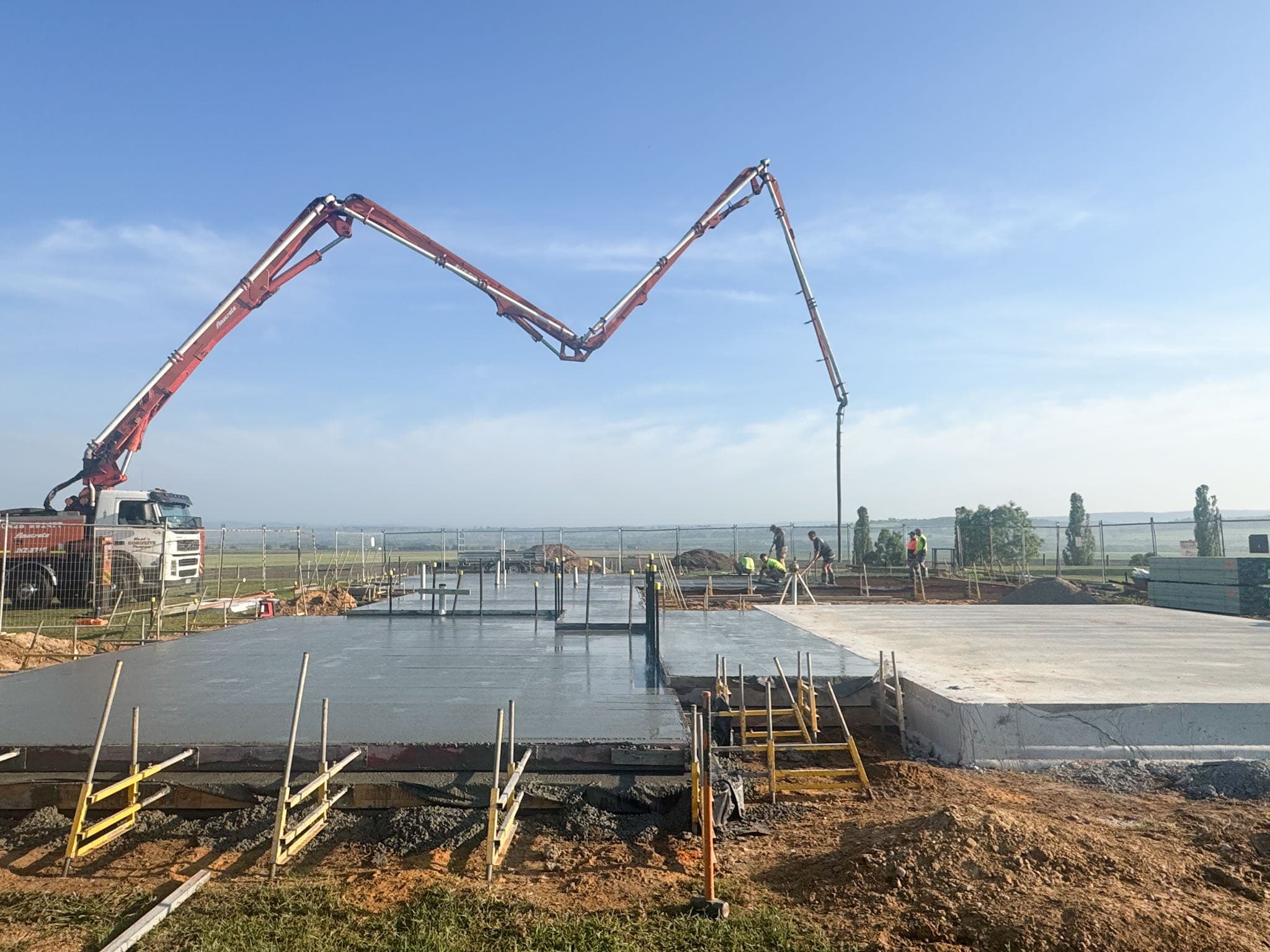
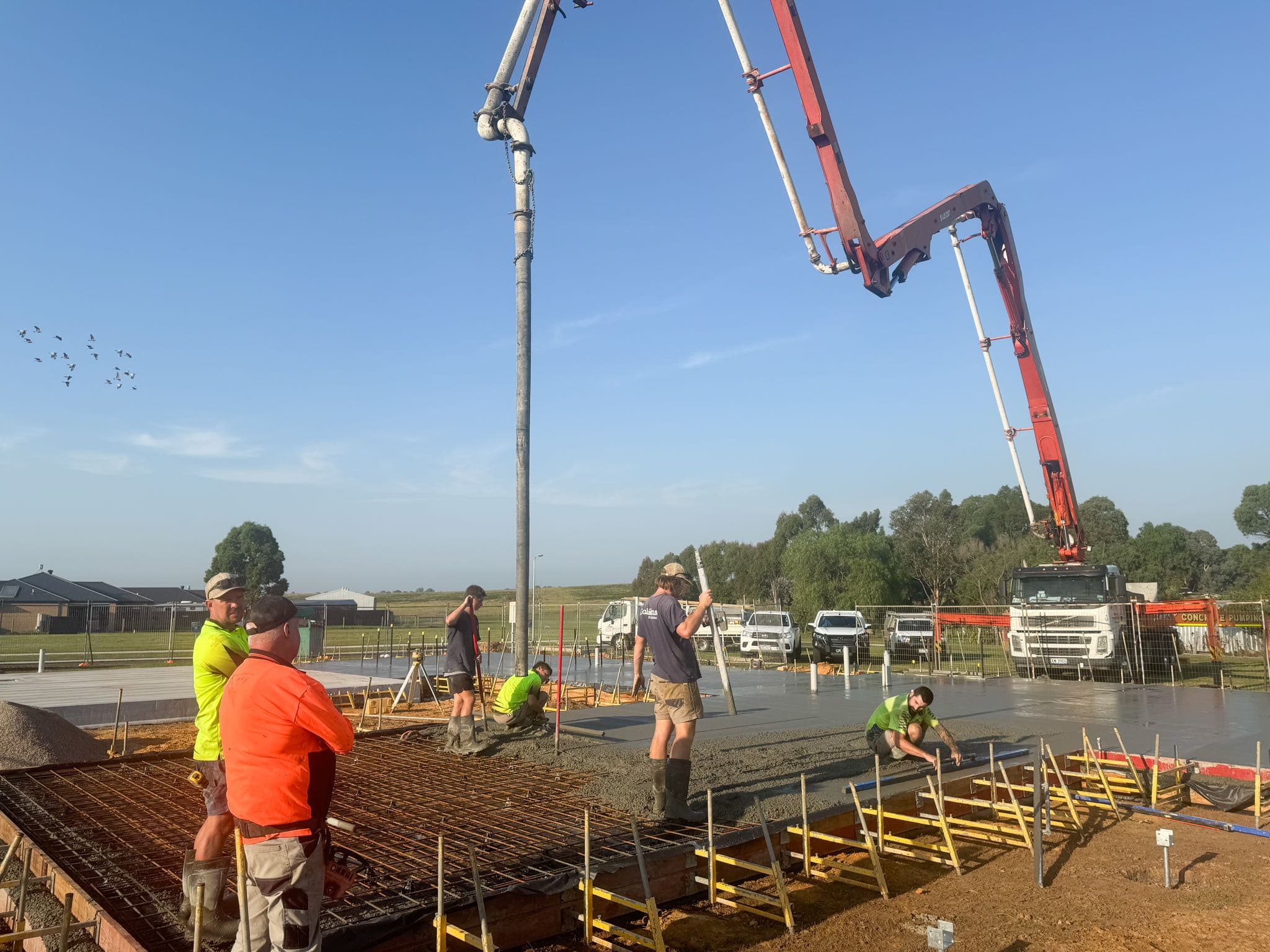
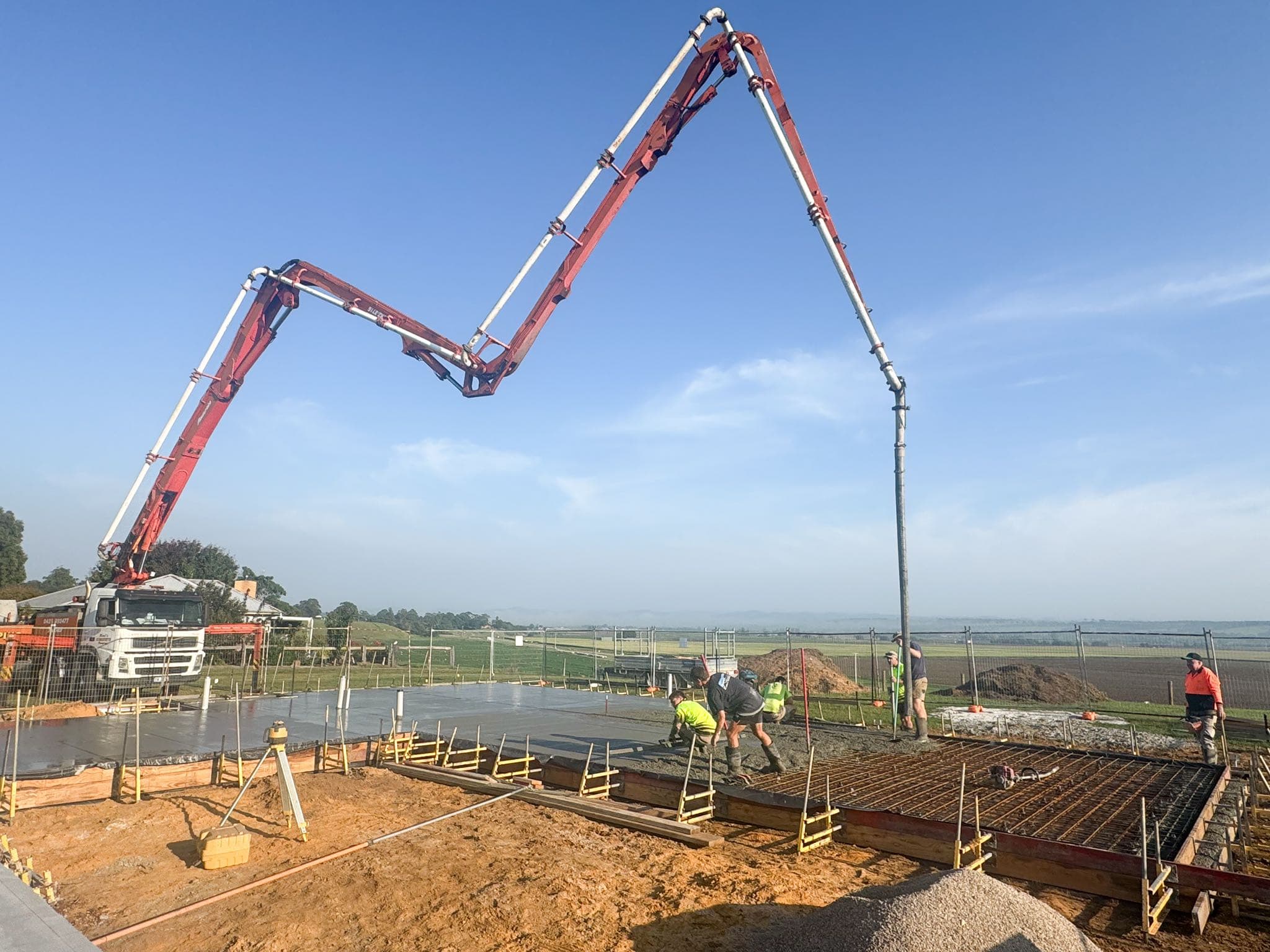
- Can a concrete agitator truck get within thirty to forty metres of the slab? If not, we need to pump.
- Pump trucks add real money. Usually hundreds per hour plus a mobilisation fee. On a steep or tight block in Lakes Entrance or Paynesville this can be the difference between a $15k slab and an $18k slab.
- Overhead power lines, low branches, narrow side access and soft ground all factor in.
Slab thickness and reinforcement
- The engineer specifies these. A house slab isn’t a shed slab, and a domestic garage slab isn’t a commercial yard slab.
- Thicker slab means more concrete volume, which is roughly a linear cost increase.
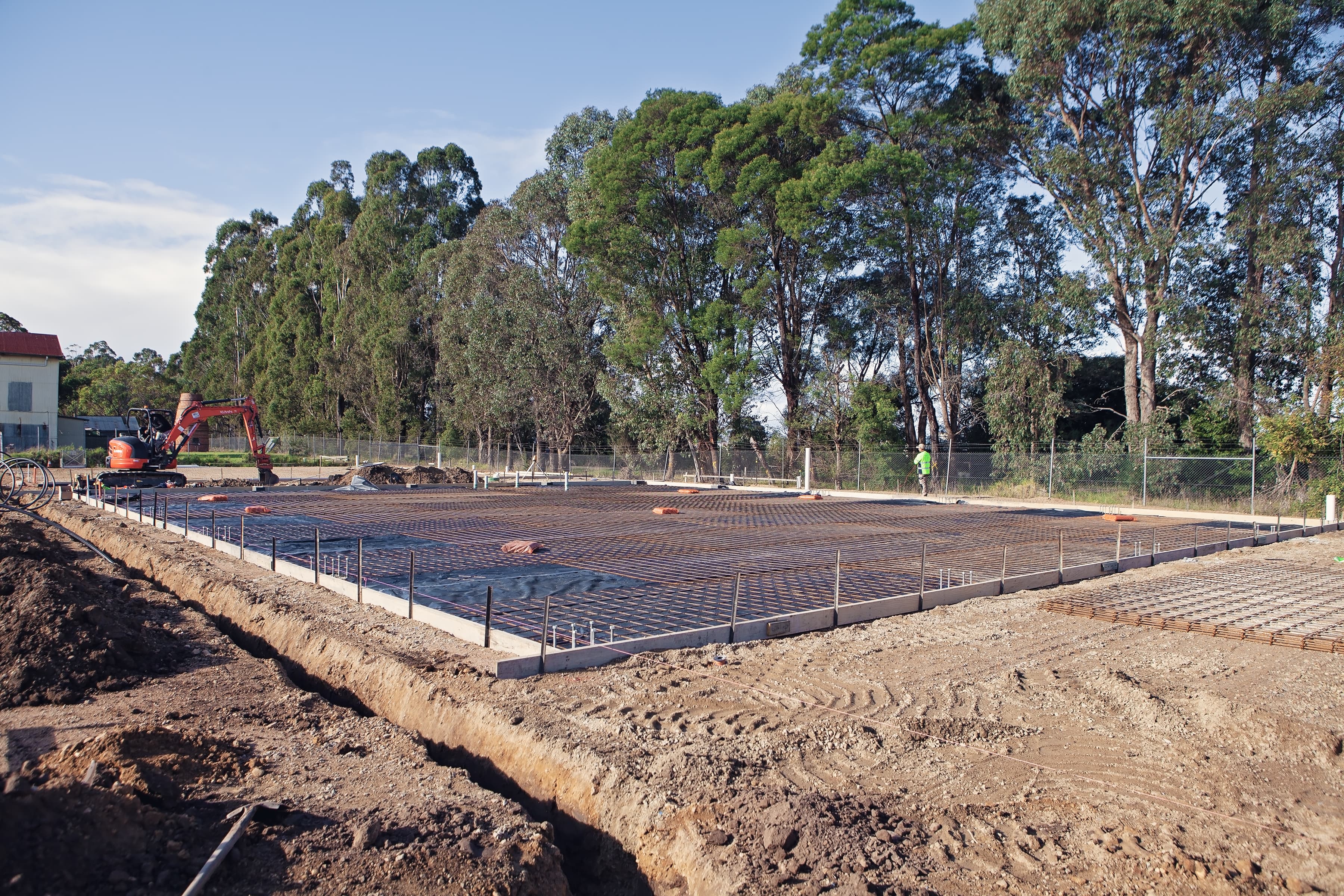
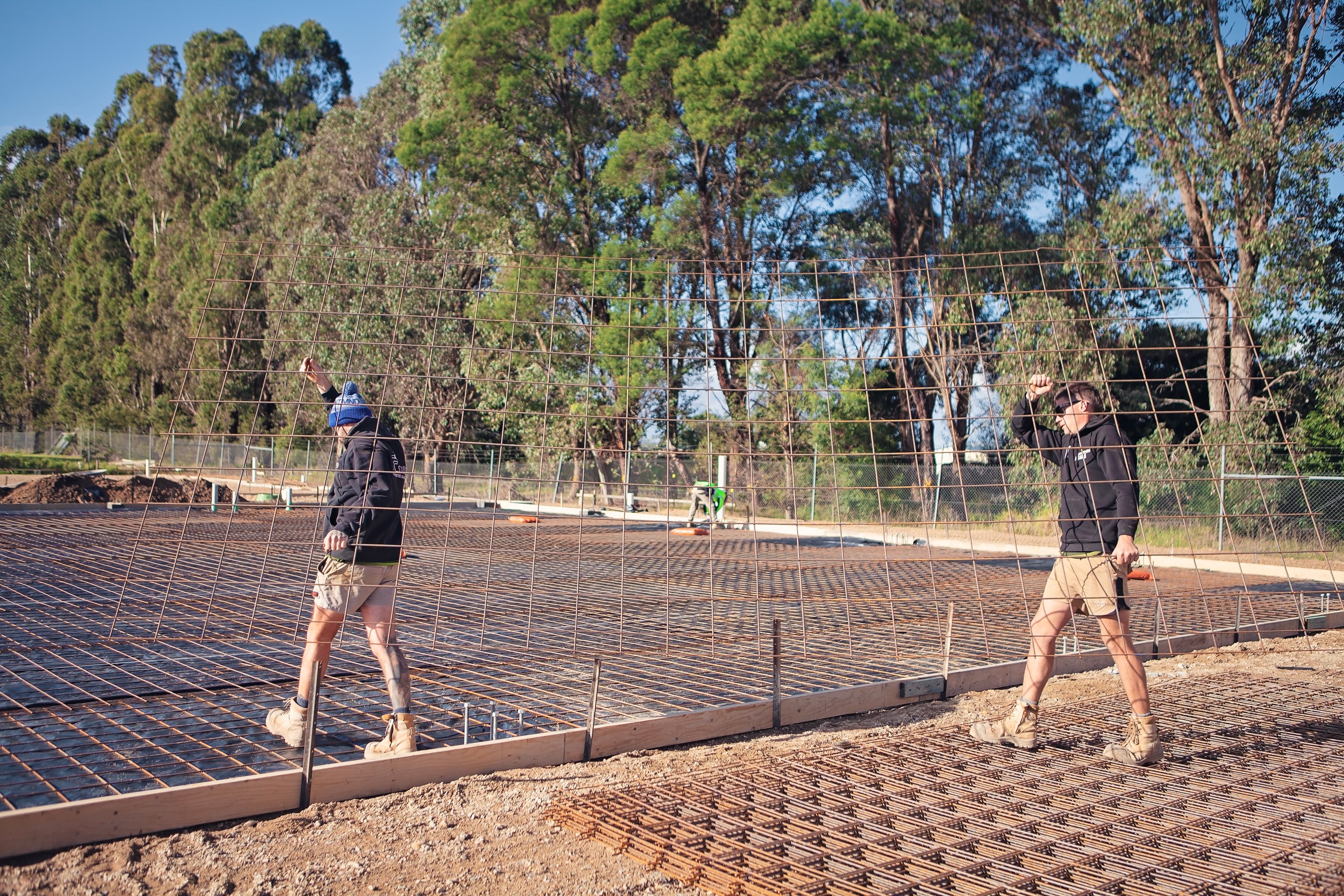
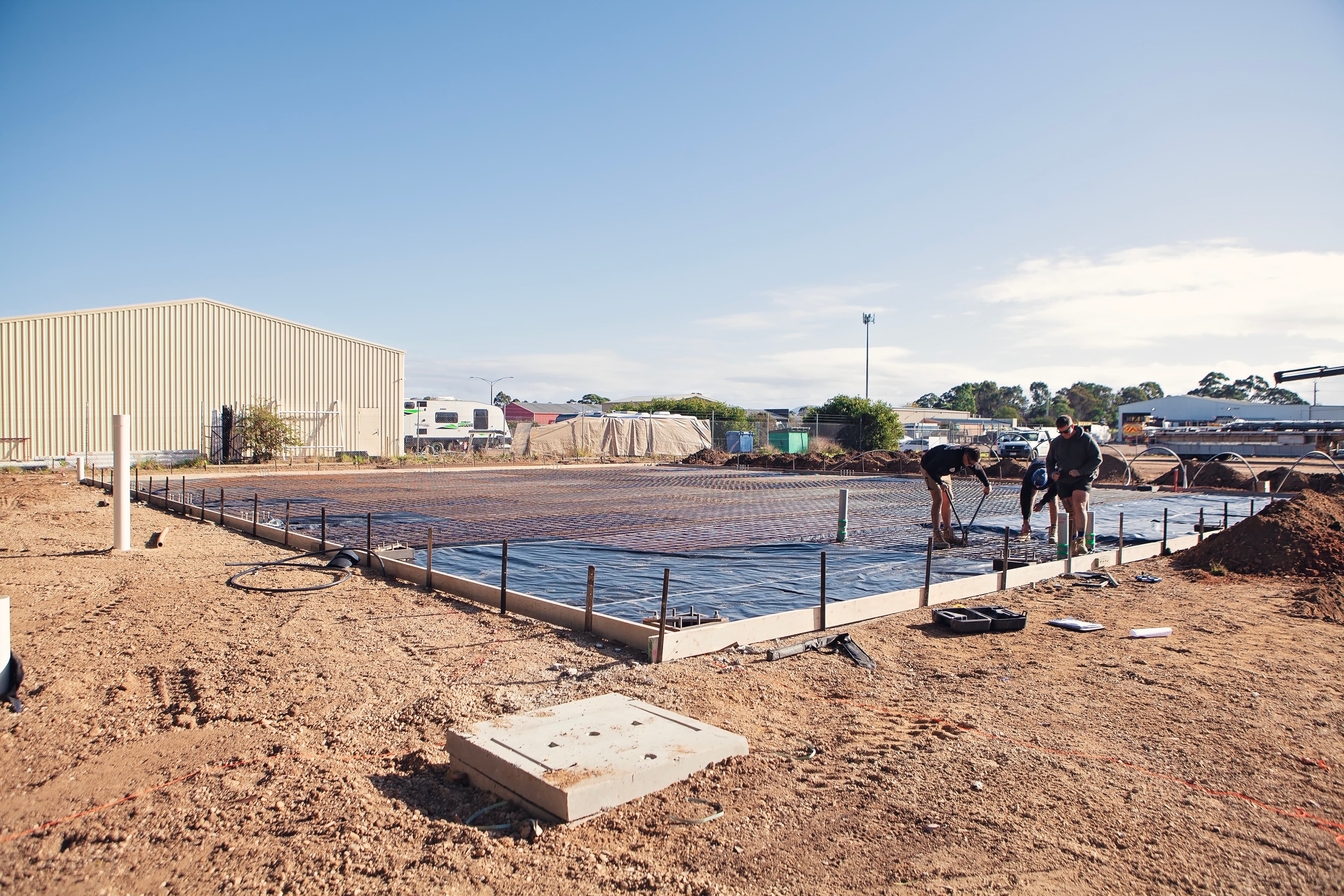
- Reinforcement spec (mesh versus bar, footing sizes, waffle pods versus raft) has a material effect.
- Skipping reinforcement to save money is a classic false economy. A slab that cracks in year two costs more to fix than doing it right the first time.
Excavation and fill
- Is the block level? Unlikely.
- How much needs to come out? How much needs to come in?
- Tip fees on removed spoil add up.
- We do our own excavation, which keeps this line honest. When the same team digs and pours, you’re not getting two overlapping quotes with padding in both.
The finish
- A broom finish is the baseline price.
- Coloured concrete adds cost per square metre.
- Exposed aggregate needs different prep, more labour and specific cure timing.
- Polished concrete on a driveway is a different job entirely.
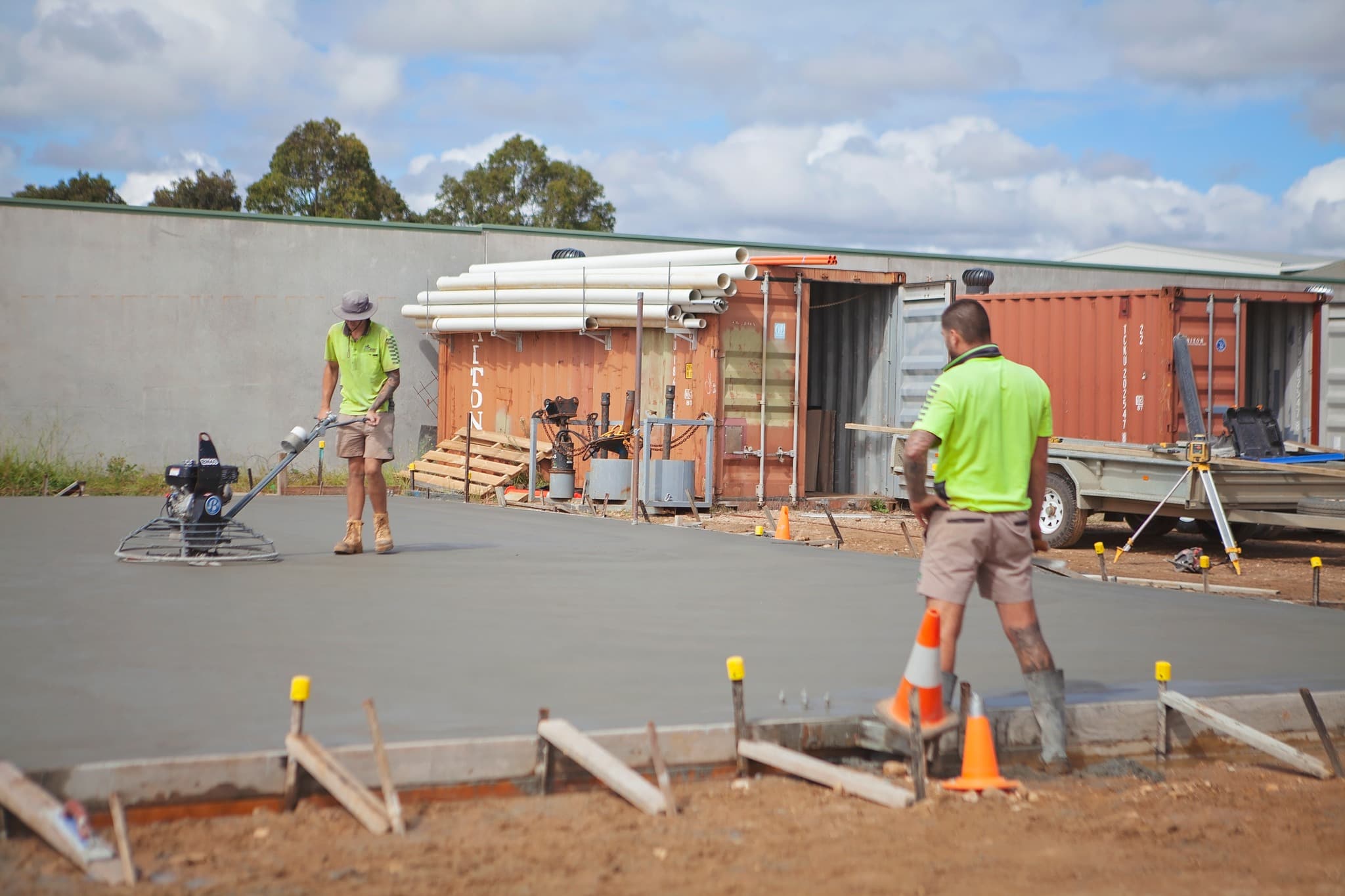
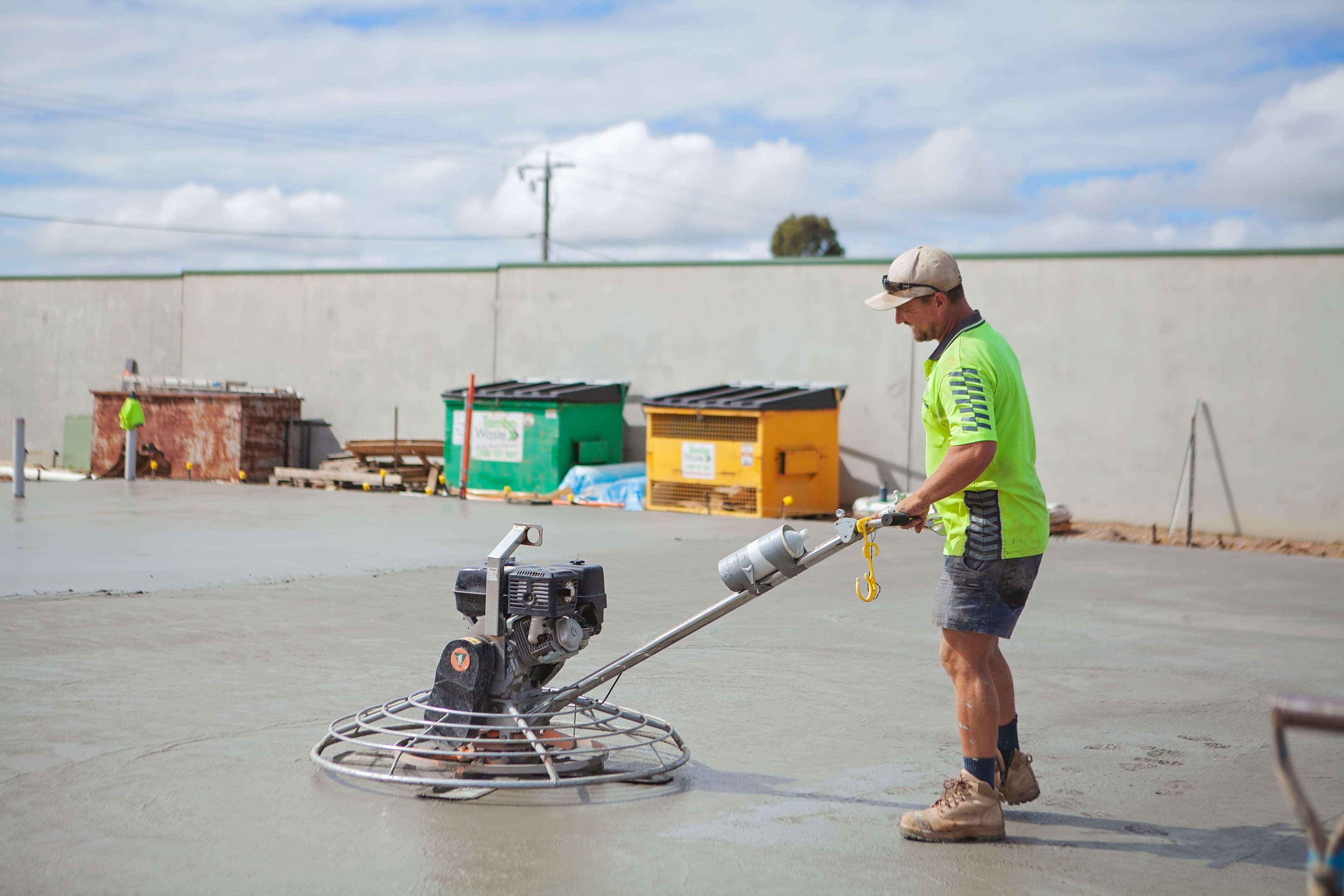
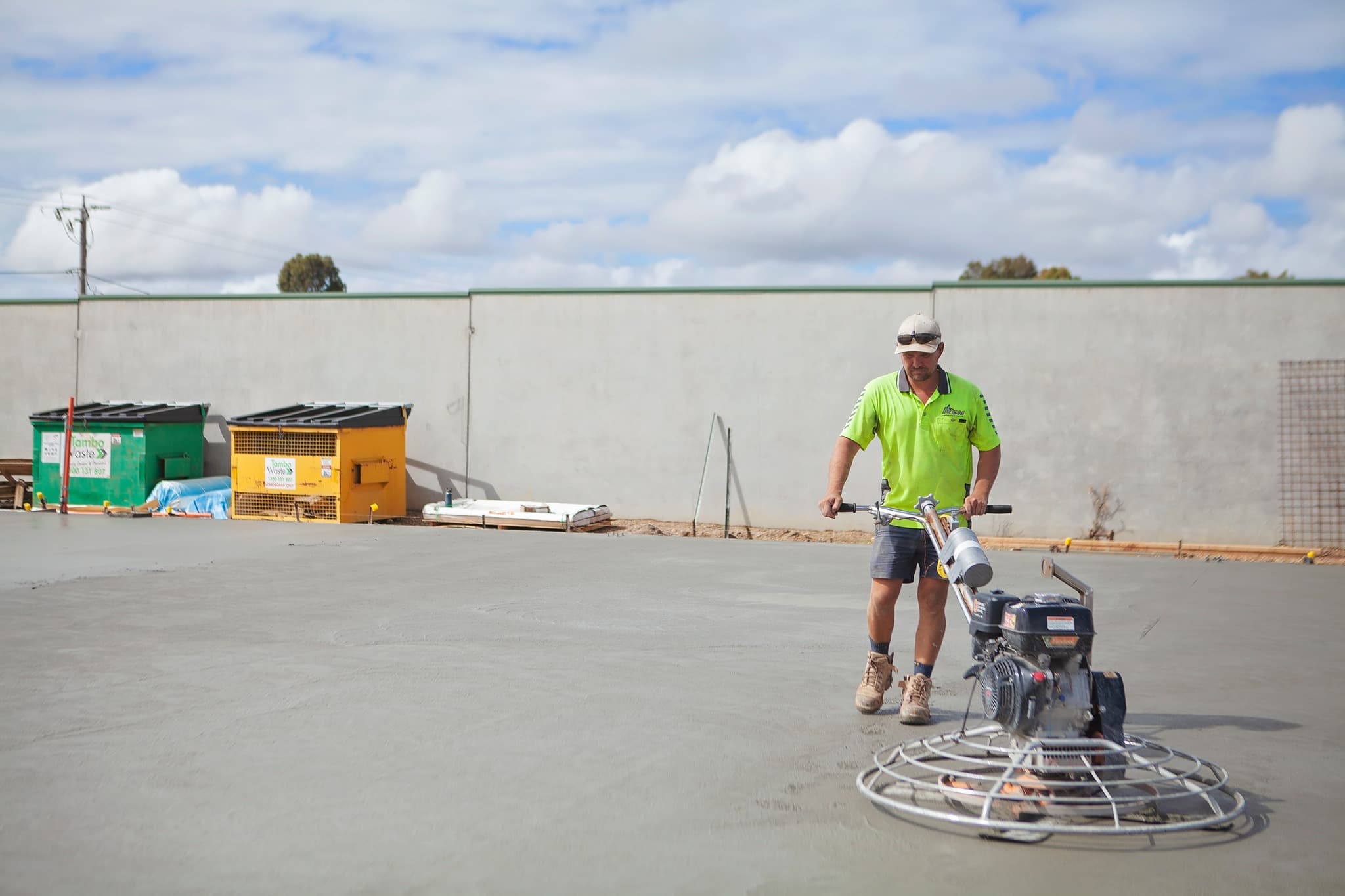
- Power-trowelled commercial finishes are for indoor slabs.
Drainage
Where does water go? If drainage isn’t planned, the slab becomes a problem. Sometimes that means a site cut-off drain, a swale, ag pipe around the slab or a trench behind retaining. Cheaper to handle it now than rip it in later.
The pour program
- A slab you need in two weeks will cost differently to one that can wait six.
- Spring and early summer is our busiest period. Winter is often faster to book and, with the weather managed, the same quality.
- If the job is tied to builder milestones or inspection dates, programming affects the number.
Weather
We won’t pour a slab into bad weather. If forecast rain, extreme heat or a frost risk threatens the cure, we reschedule. That’s built into how we program, not a surprise variation later. It can move your start date though.
So what do you actually do?
Call us for a site visit. Twenty minutes on the block and we can write you a firm number. We’ll tell you what’s driving the price, what we’d recommend you change (if anything), and what a realistic start window looks like.
No surprises on pour day. That’s the deal.