Some fine hairline cracking in concrete is normal as it cures and cannot always be stopped. The cracks that matter, the ones that widen, step or let water in, almost always trace back to the ground prep, the reinforcement or missing control joints, not the concrete itself. On reactive clay around Bairnsdale, most serious cracking is a prep problem, and prep is controllable.
Updated October 2026.
Let us be straight with you up front. All concrete cracks a little. Anyone who promises you a slab or driveway that will never show a hairline is either inexperienced or not being honest. The real question is not whether concrete cracks, it is which cracks matter and whether they were preventable. Most of the cracks that actually cause trouble were baked in before the pour, in the ground prep, the steel or the joints. That is the good news, because all three are things we control.
Cosmetic cracks vs structural cracks
There are two kinds of crack and they are not the same conversation. Hairline shrinkage cracks are cosmetic. They are fine, shallow surface lines that appear as concrete gives up water and shrinks slightly during the first weeks of cure. They do not move, do not widen and do not affect how the slab carries load. Most slabs and driveways get a few, and they are not a fault.
The cracks that matter are the ones that widen over time, step or lift so one side sits higher than the other, run right through the slab, or open wide enough to let water in. Those are structural or movement cracks, and they point to something under the surface: the ground shifted, the reinforcement was light, or a joint that should have controlled the crack was not there. When we talk about preventing cracking, this second group is what we mean.
The real causes
Serious cracking is rarely the concrete’s fault. It is almost always one of these, and often more than one at once.
- Poor sub-base and compaction. If the ground under the slab is soft, unevenly compacted or full of organic material that rots and settles, the slab loses support and cracks over the soft spot. This is the single most common cause we see.
- Reactive clay movement. Reactive soil swells when wet and shrinks when dry. Across Bairnsdale, Lindenow and the inland flats this movement is strong enough to crack a slab that was not engineered and articulated for it.
- No or badly placed control joints. Concrete is going to shrink. Control joints are deliberate weak lines that tell it where to crack, straight and hidden, instead of wandering across the surface. Miss them or space them wrong and the slab chooses its own crack line.
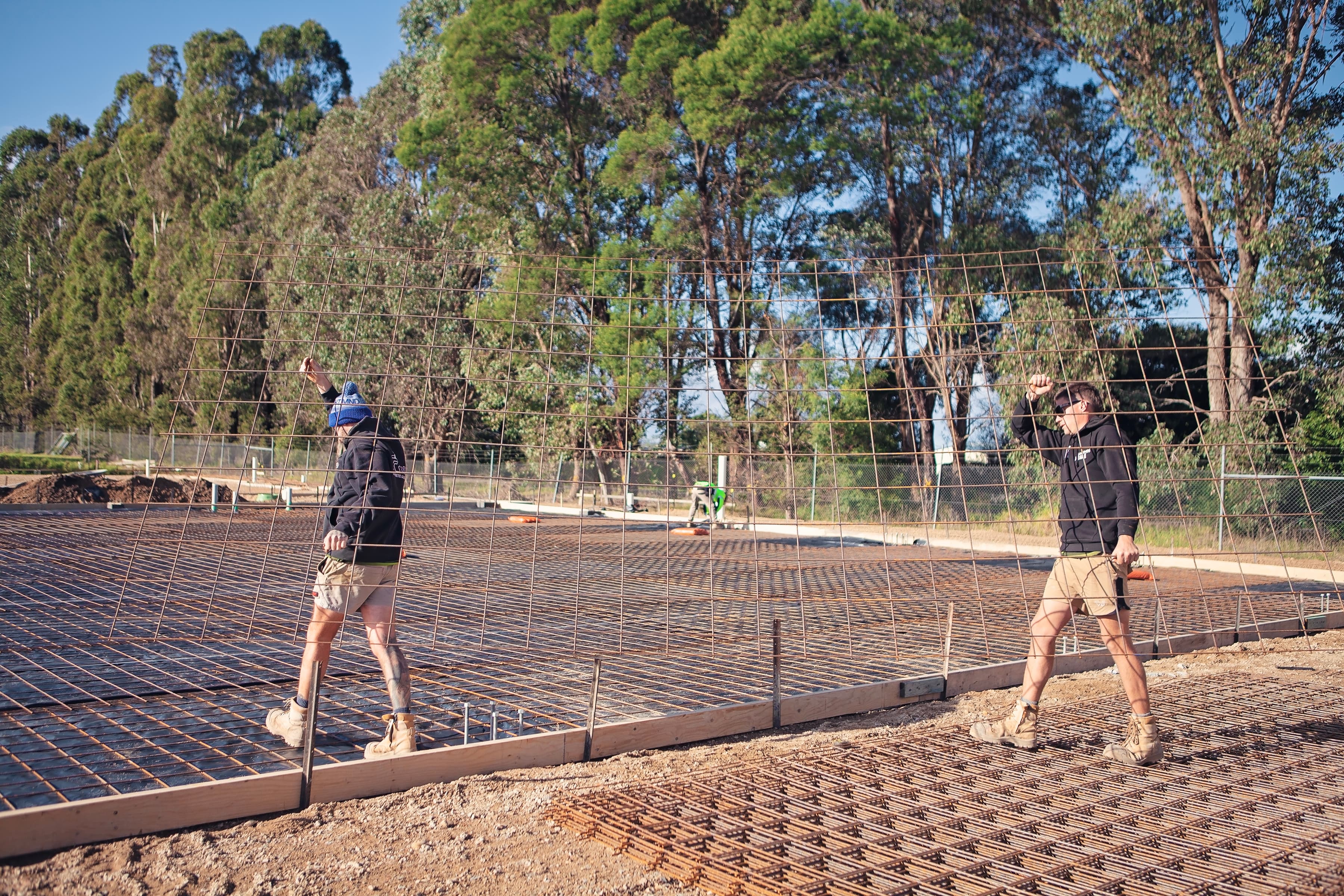
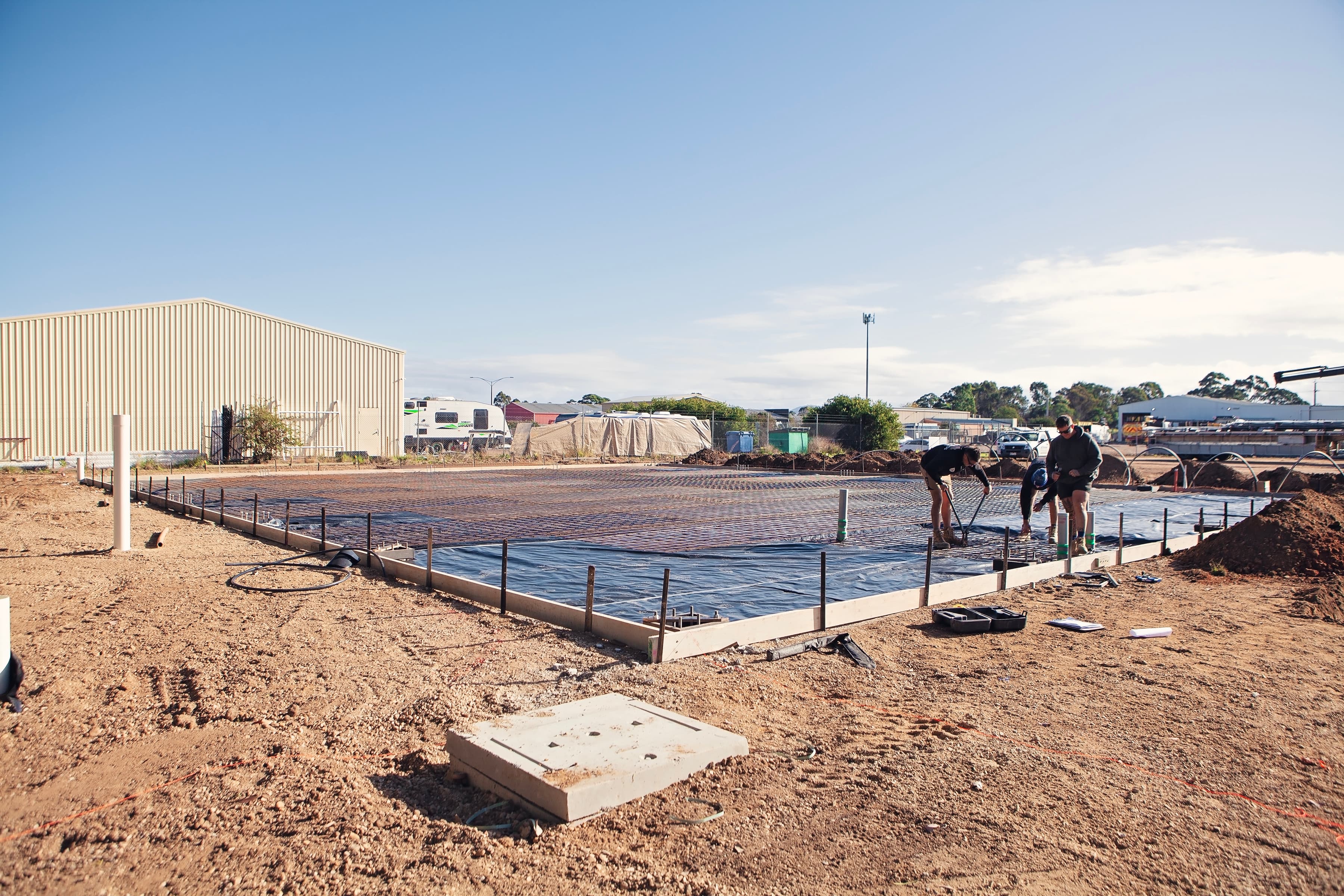
- Underspec reinforcement. Too little steel, mesh where bar was needed, or footings that are too shallow, and the slab cannot hold itself together when the ground moves under it.
- Curing too fast. If a fresh slab loses moisture too quickly in sun or wind, the surface shrinks faster than the core and crazes or cracks. Proper curing slows that down.
How we control each one
Every one of those causes is preventable with the work done before and around the pour. Here is how we handle them.
Ground prep and compaction
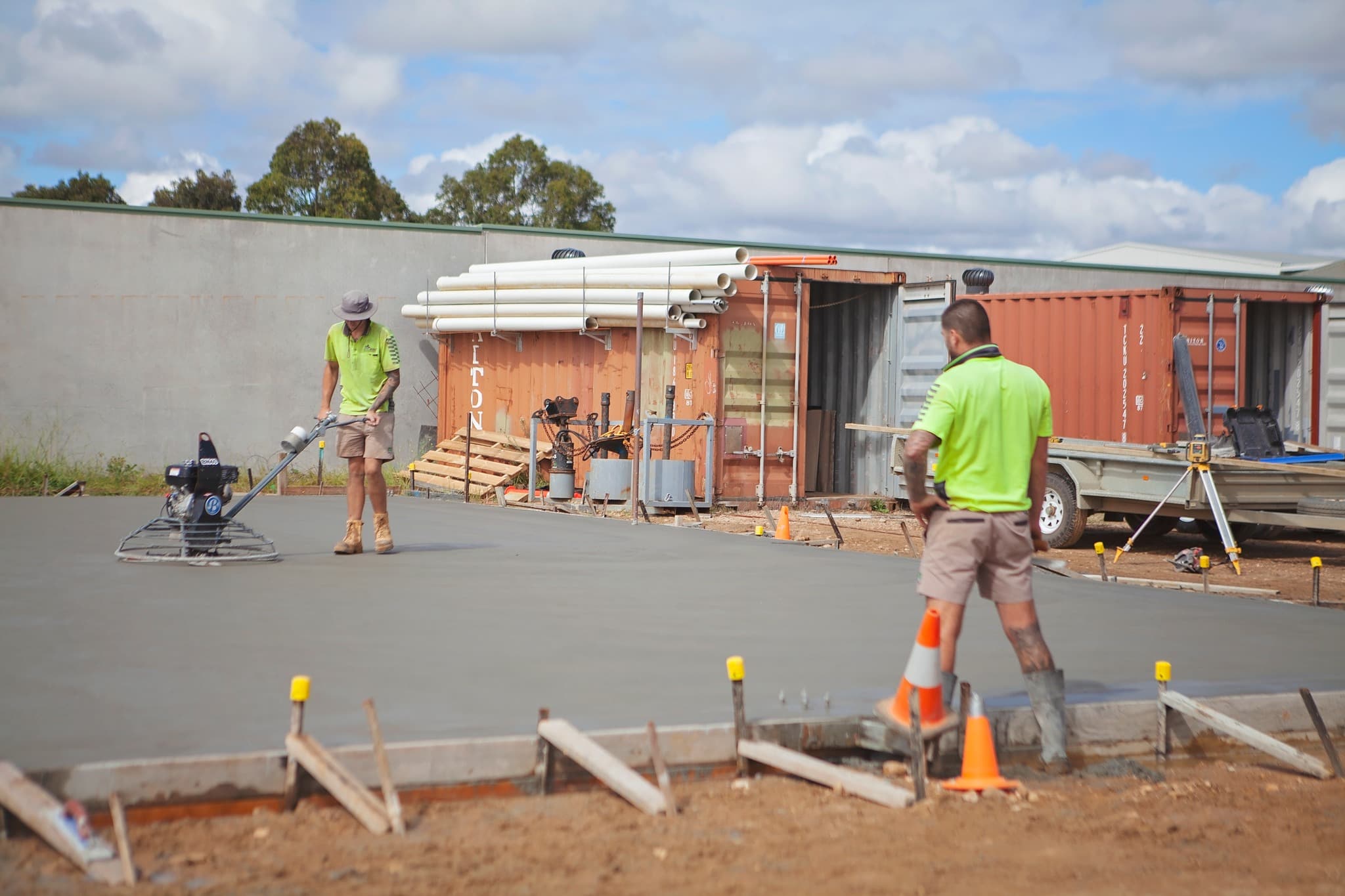
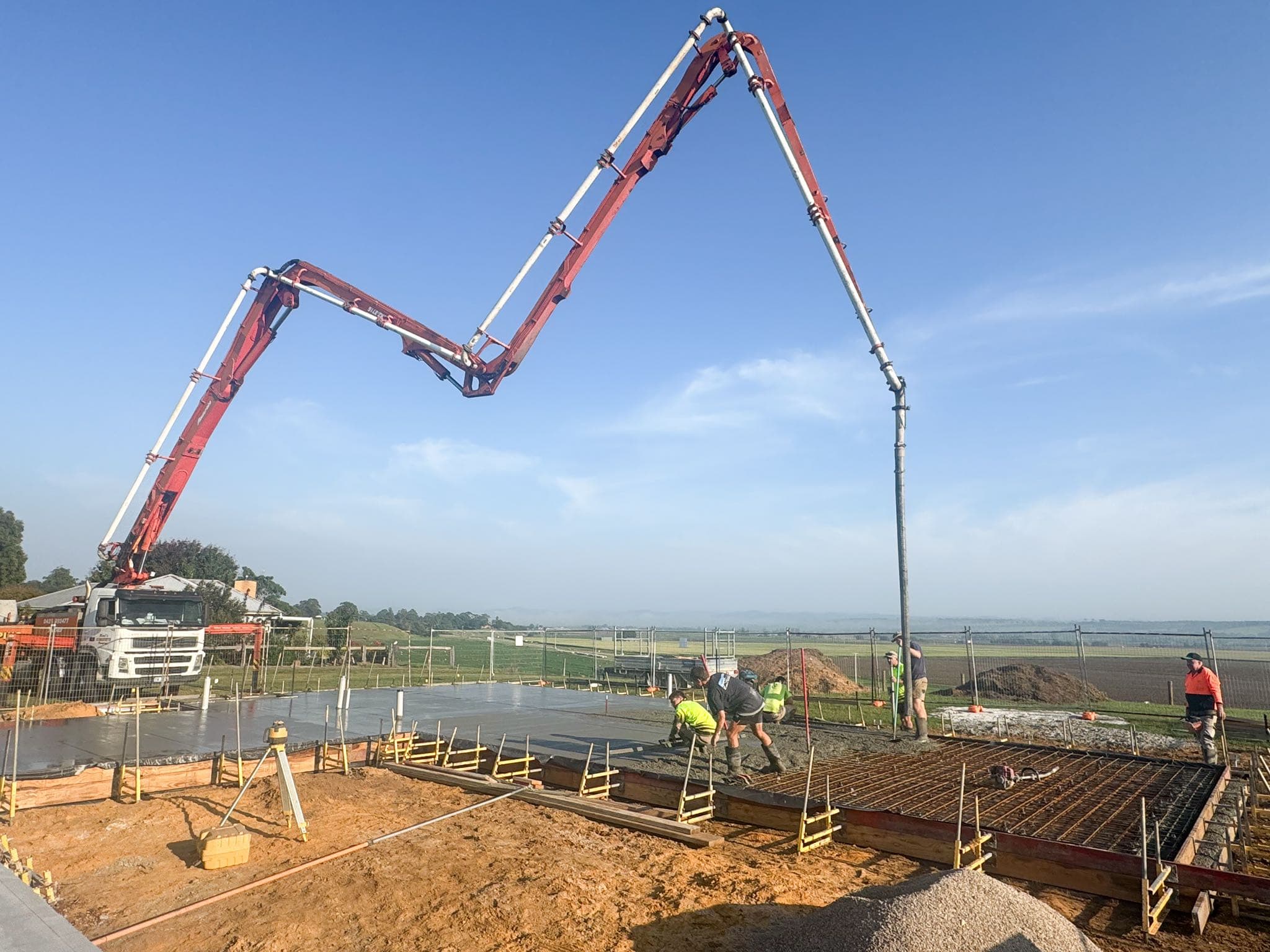
We do our own excavation, so the dig and the pour are the same team off the same plan. We strip topsoil and organic material, cut to stable ground, bring in and compact fill in layers rather than one loose lift, and get the sub-base the engineer will sign off on. A slab is only as good as what it sits on, and this is where most cracking is either prevented or built in. Getting the site cut and excavation before a slab right is what most of that comes down to.
Reinforcement engineered to the site
We build to the engineer’s spec, not a rule of thumb. On reactive clay that means the footing depth, articulation and steel the site classification calls for, which is where the choice between waffle pod vs raft slabs comes in. Reactive ground needs more, and we’d rather quote the reinforcement the site needs than win the job with a slab that cracks in year two.
Control joints placed properly
We cut or form control joints at the right spacing and depth so the slab shrinks along lines we chose. On a driveway that means joints spaced to the width and thickness, tooled or saw-cut early enough to work. Placed well, a control joint gives you a straight, tidy line instead of a crack across the middle.
Curing at the right pace
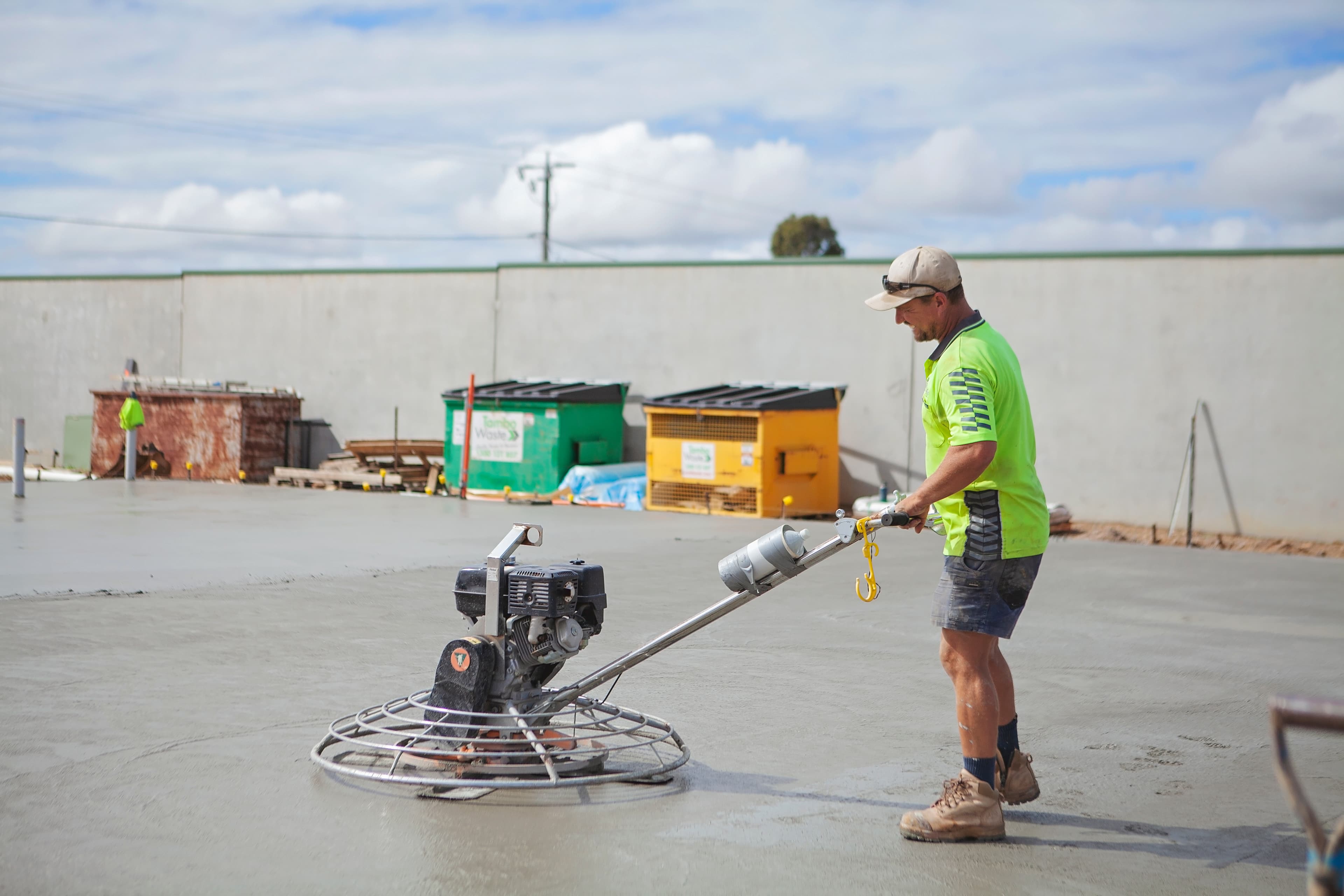
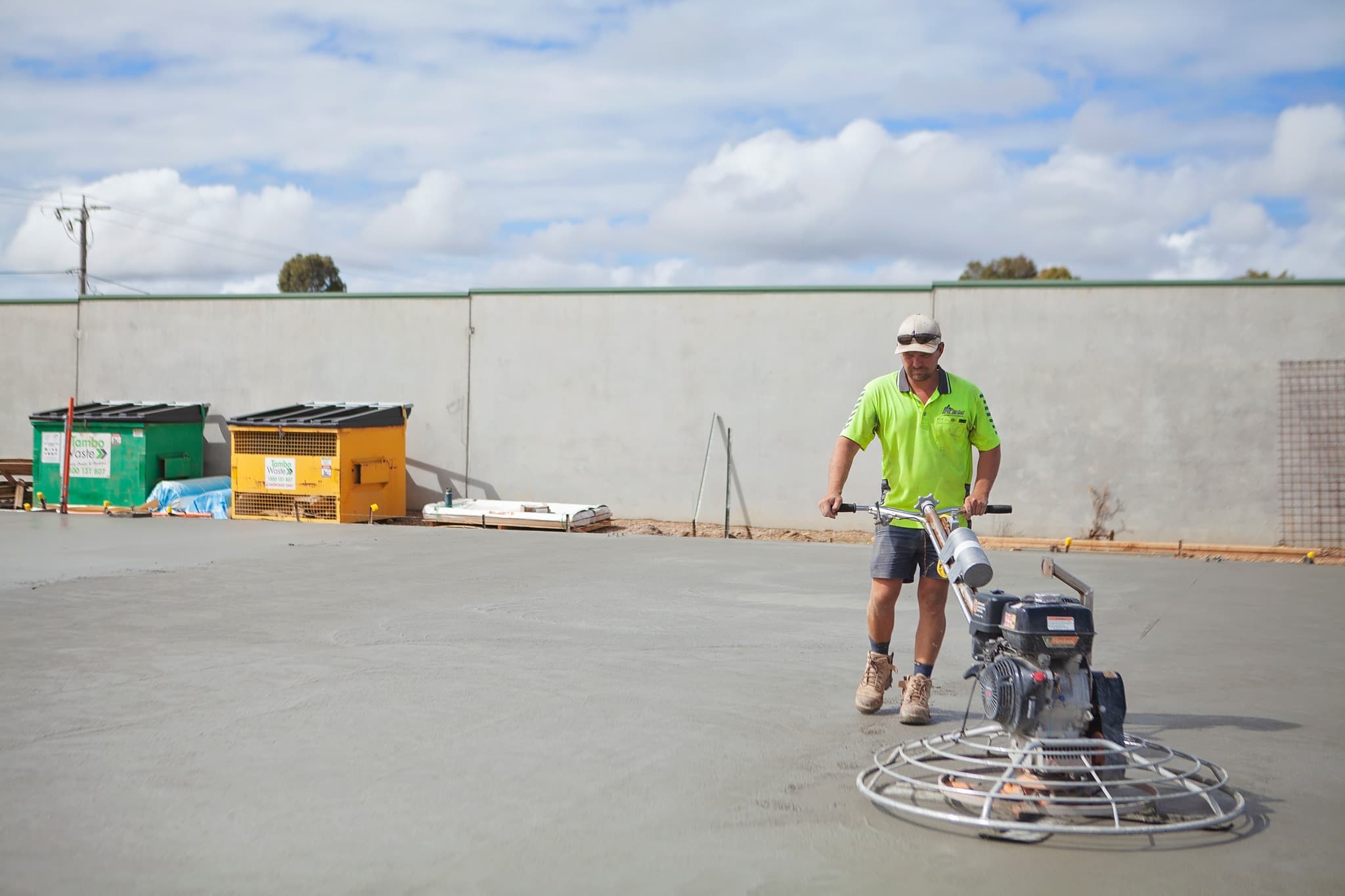
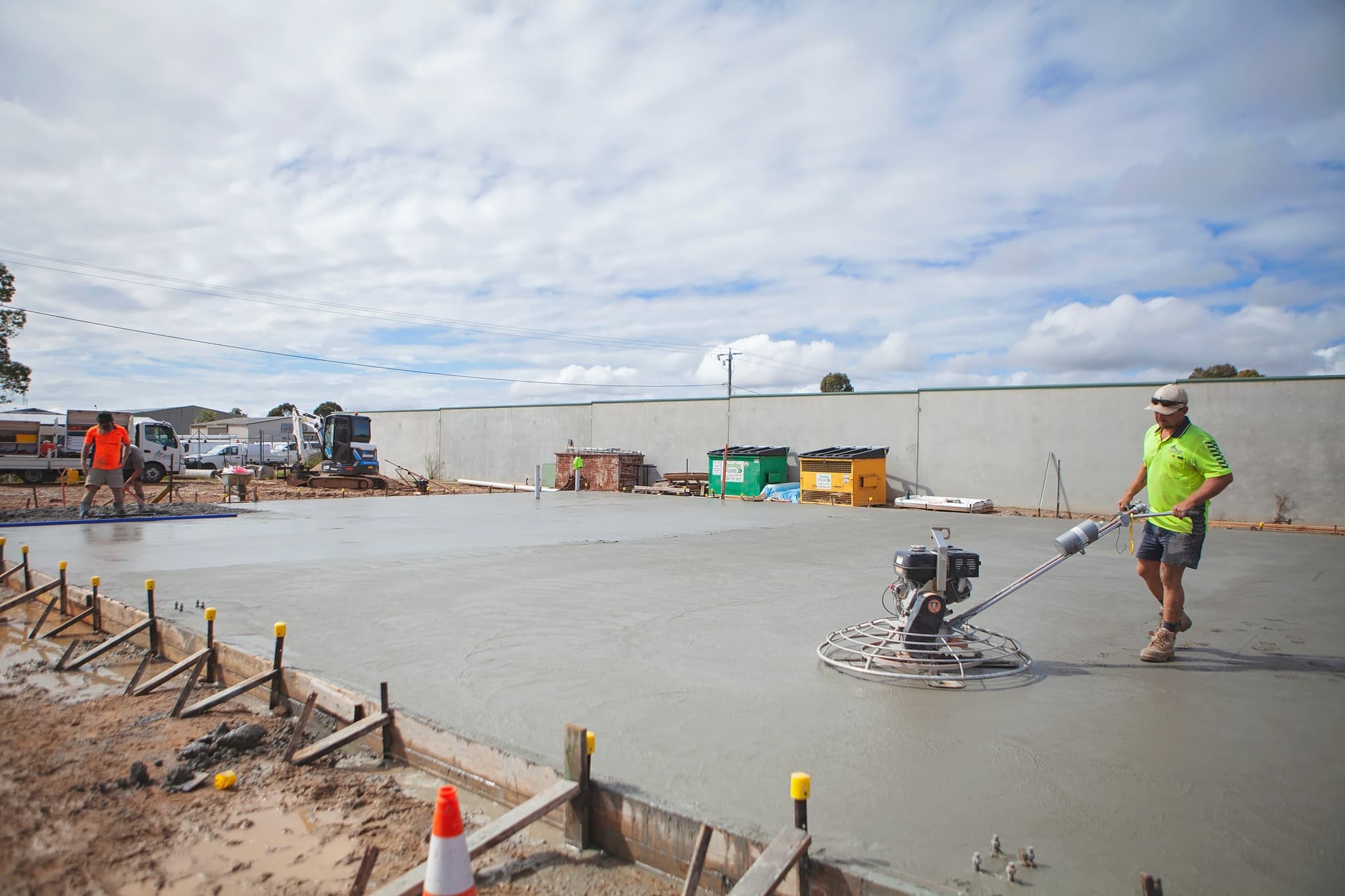
We protect fresh concrete from drying too fast, whether that is curing compound, cover or timing the pour away from a hot, windy afternoon. Slower, controlled moisture loss means the surface and the core shrink together, which keeps crazing and surface cracking down.
The East Gippsland reactive-clay reality
If you’re inland around Bairnsdale or Lindenow, reactive clay is the crack risk to plan for. It’s common, it moves with the seasons, and it doesn’t care how good the concrete mix is if the slab wasn’t engineered for it. That’s why we assess the ground before we quote, ask for the soil report, and design the footings and articulation to the site. The sandy coastal blocks over toward Paynesville and Lakes Entrance carry their own compaction and drainage needs, but the principle holds: the ground sets the risk, and the prep controls it.
What this means for your slab or driveway
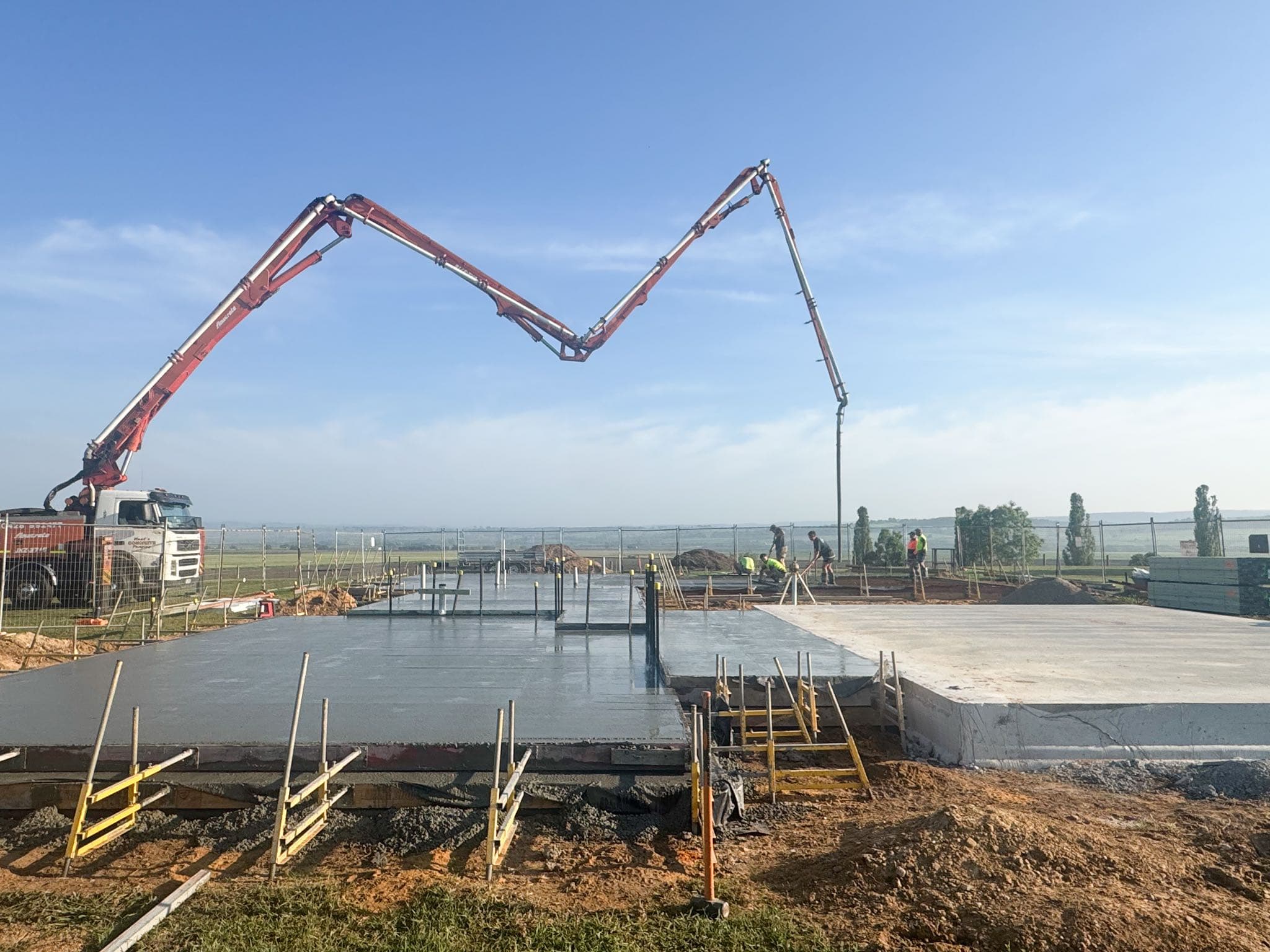
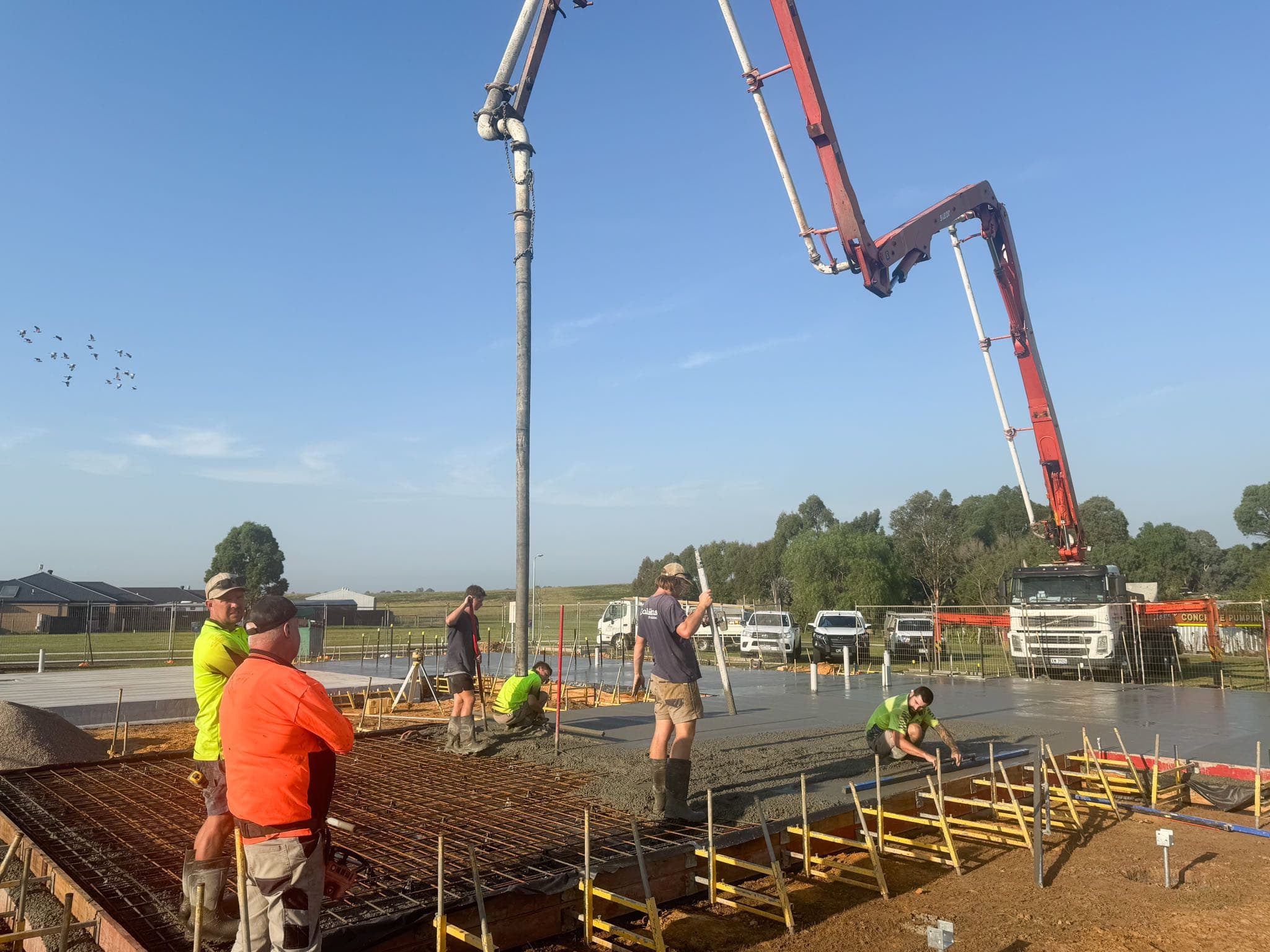
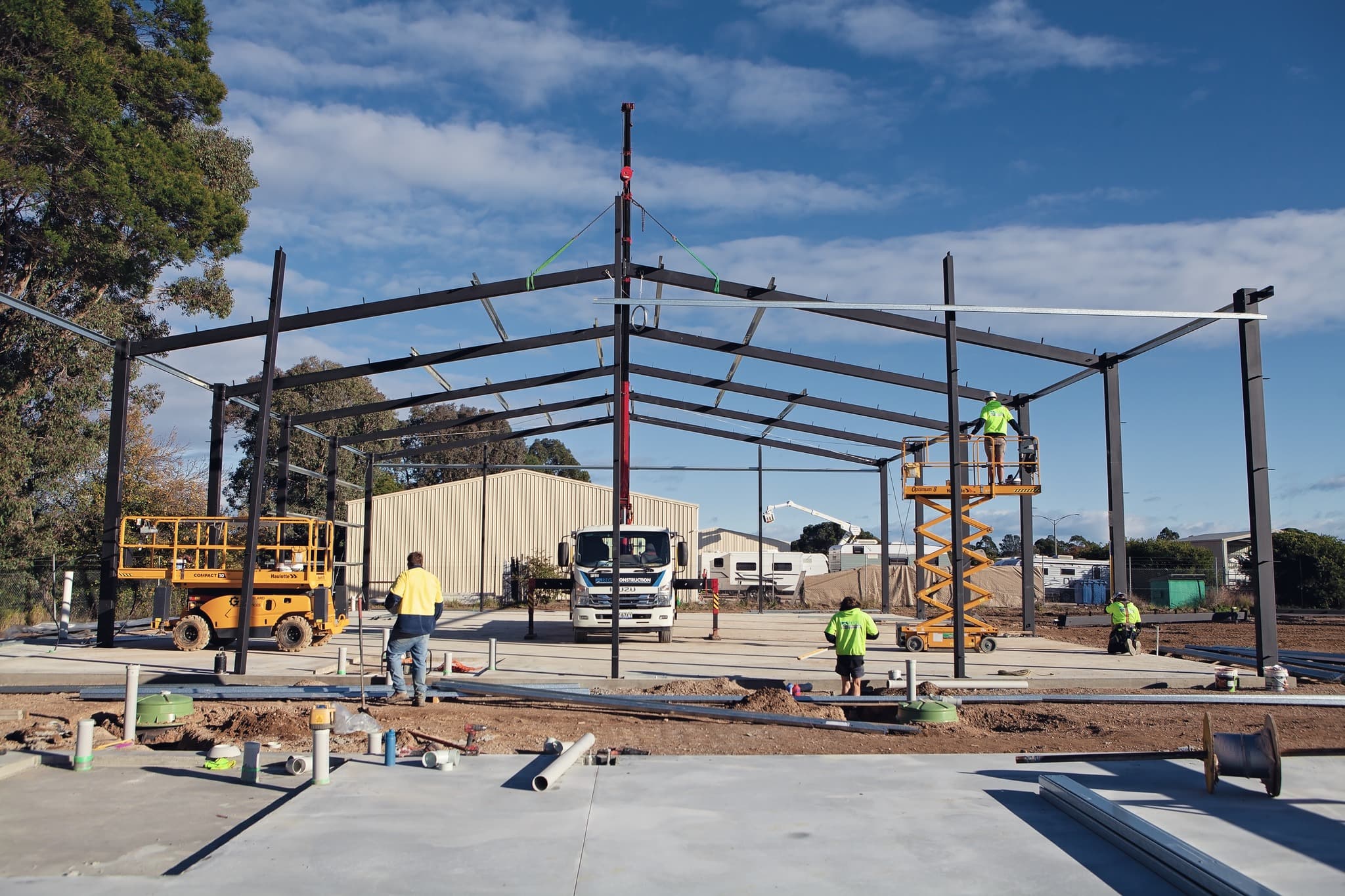
A slab or driveway that cracks in a way that matters is almost always a prep, steel or joint problem, and all three are ours to get right. That’s the whole case for one team assessing the site, doing the dig, engineering the reinforcement and pouring. Our house slabs and concrete driveways are built to the spec the ground calls for, with a workmanship warranty behind them. We’d rather tell you honestly what your block needs than hand you a cheaper pour that cracks. Get a quote and we’ll design to your site before we pour.