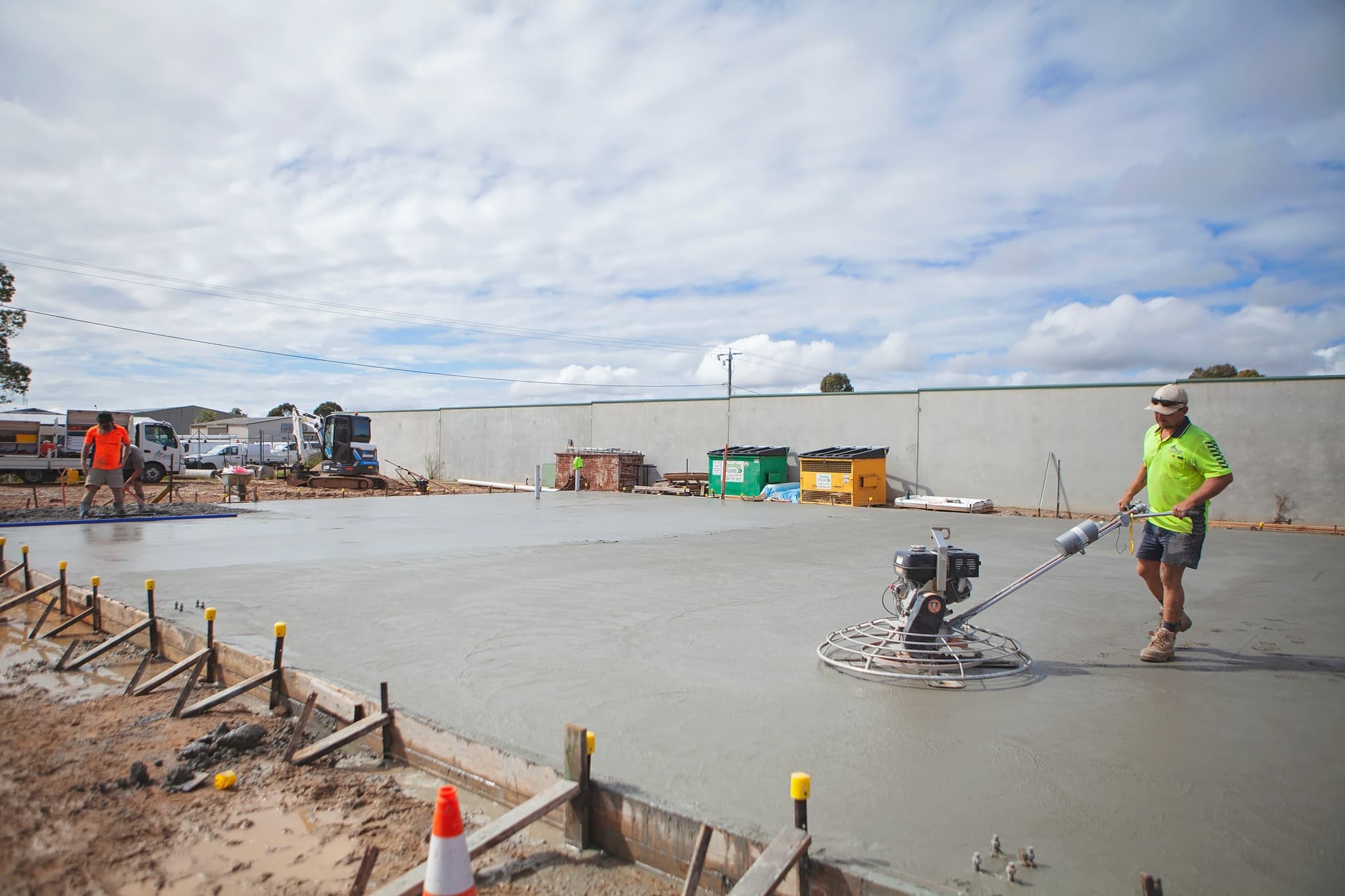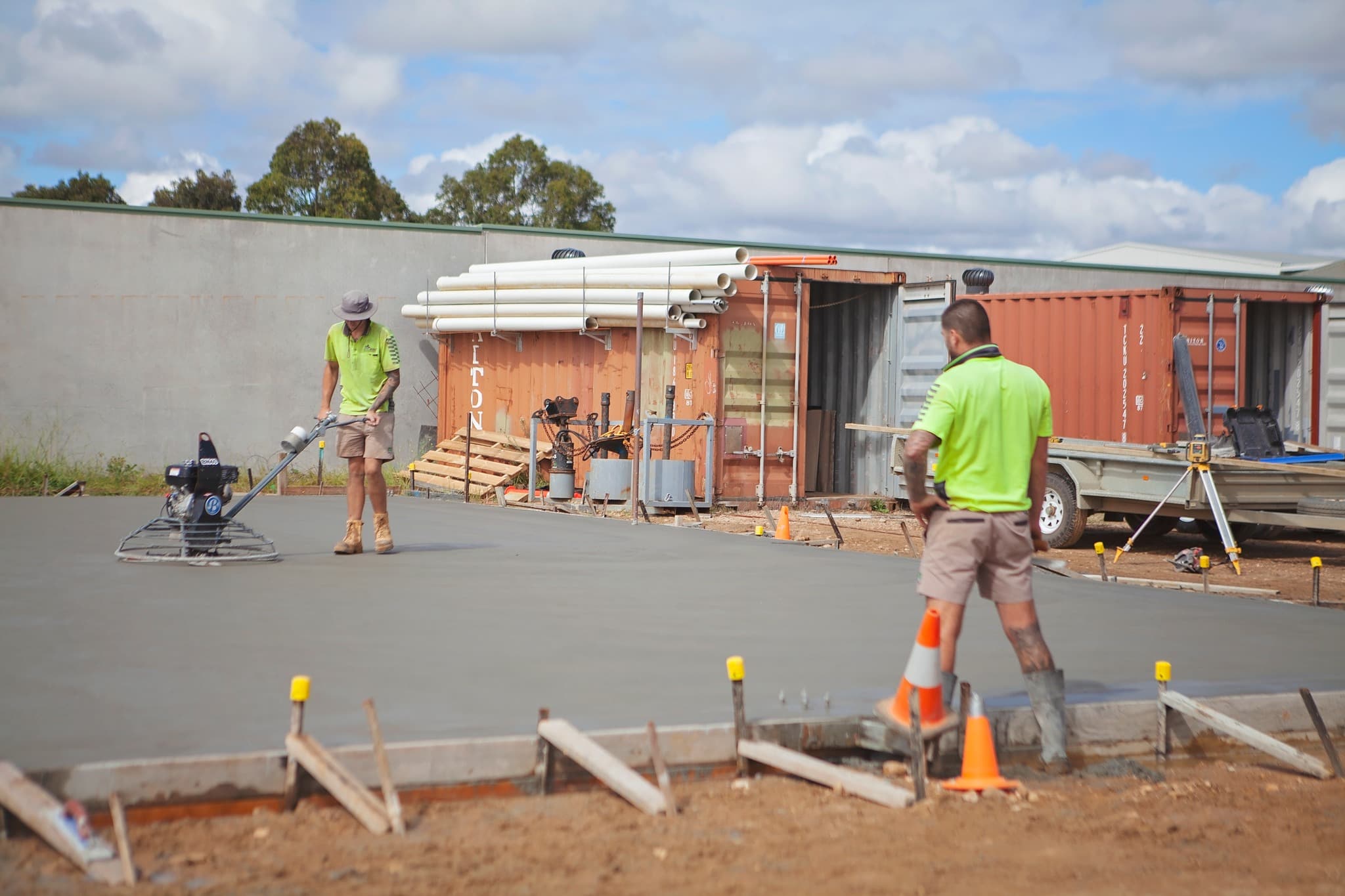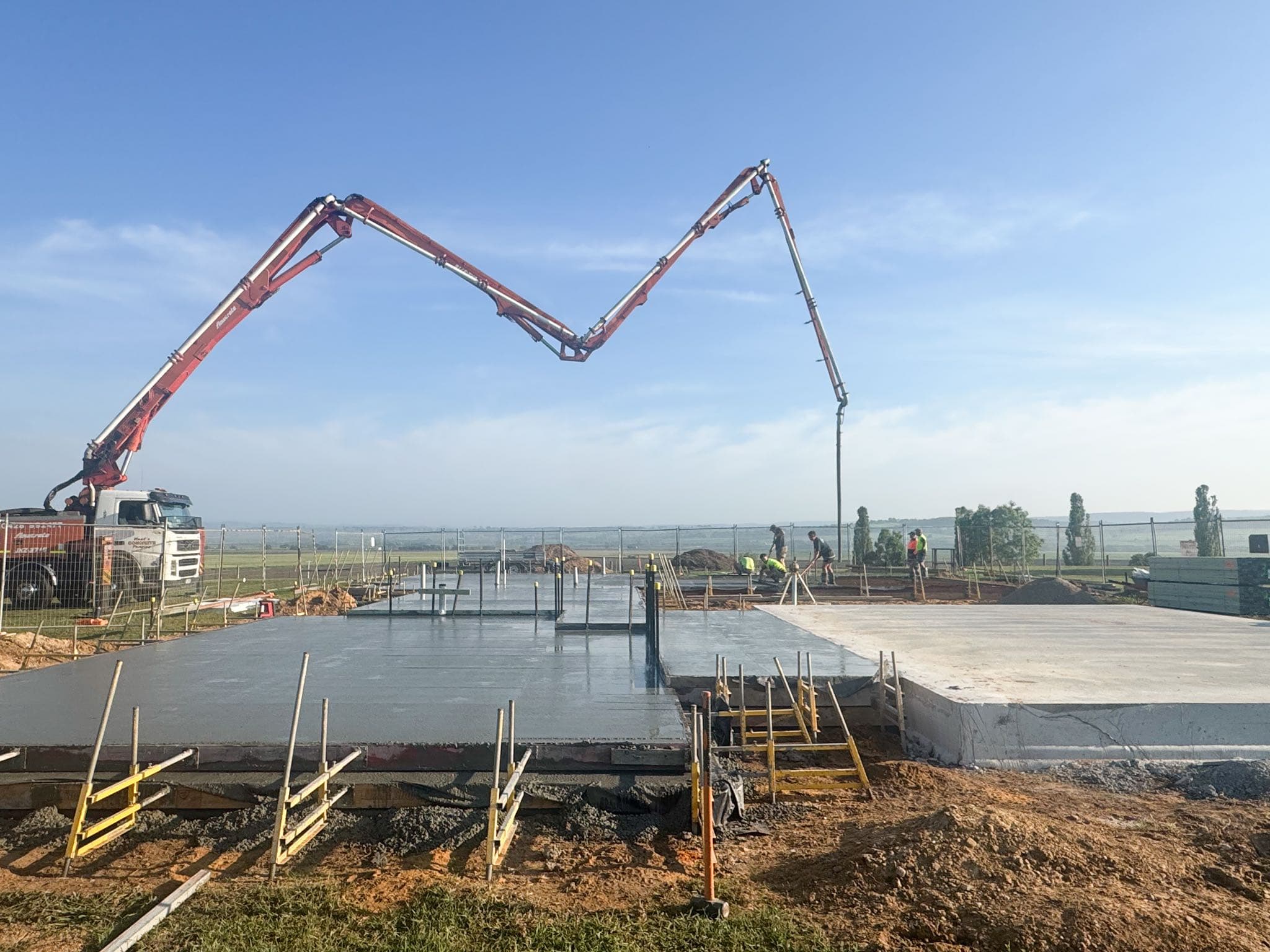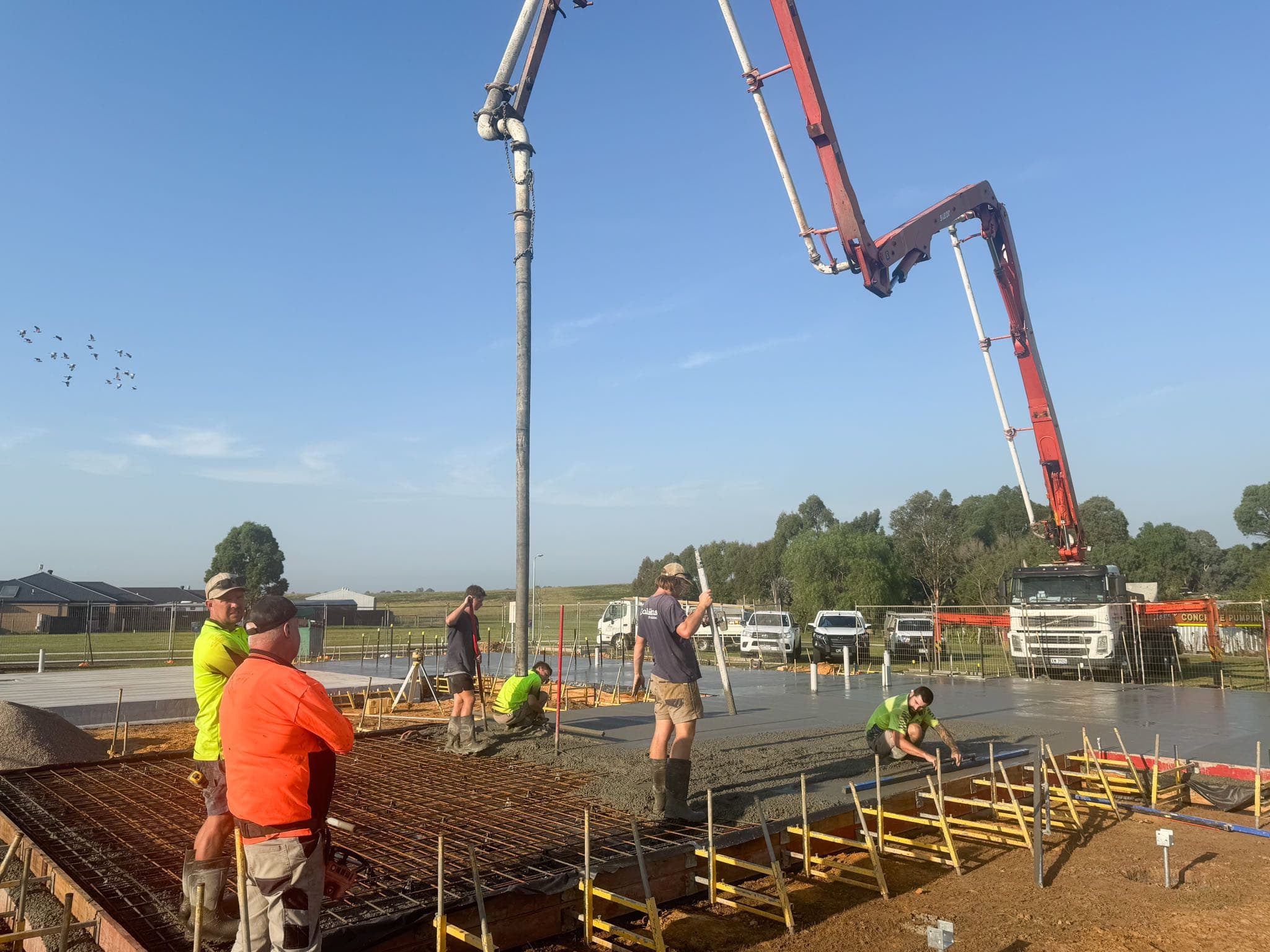

A standard car driveway is usually laid around 100mm of reinforced concrete on a prepared base. Once you are running trucks, floats, a caravan or farm machinery over it, that goes up to 150mm or more with heavier reinforcement. The load and the ground under it set the number, not a rule of thumb.
Thickness is the single spec that decides whether a driveway carries what you put on it for decades or cracks and lifts inside a couple of years. And it’s not a fixed number. It’s set by the heaviest thing that will ever roll over it and by the ground it sits on. Get either wrong and the slab pays for it.
If you are weighing up cost, thickness is one of the bigger levers in what changes the price of a driveway. More thickness and heavier steel cost more, but they are not the place to cut corners.
Thickness by use
Here is the way the bands generally fall for driveways around Bairnsdale and East Gippsland. Treat these as starting points, not gospel, because the ground can push them up.
- Standard cars and light vehicles: around 100mm of reinforced concrete on a well-prepared, compacted base. This covers most suburban driveways carrying daily cars.
- Heavier domestic loads: a caravan, a boat on a trailer, a work ute with a load, or the occasional delivery truck usually wants 125mm to 150mm with heavier reinforcement.
- Trucks, floats and farm machinery: 150mm and up, sometimes more, with a heavier steel spec and often a stronger mix. Regular heavy axle loads punish an underspec slab fast.
The point is not to hit a magic number. It is to spec for the real worst case. A driveway that sees a truck twice a year still has to survive that truck.
Reinforcement: mesh versus bar
Thickness on its own is not the whole story. Steel is what holds the slab together and controls how it cracks under load.
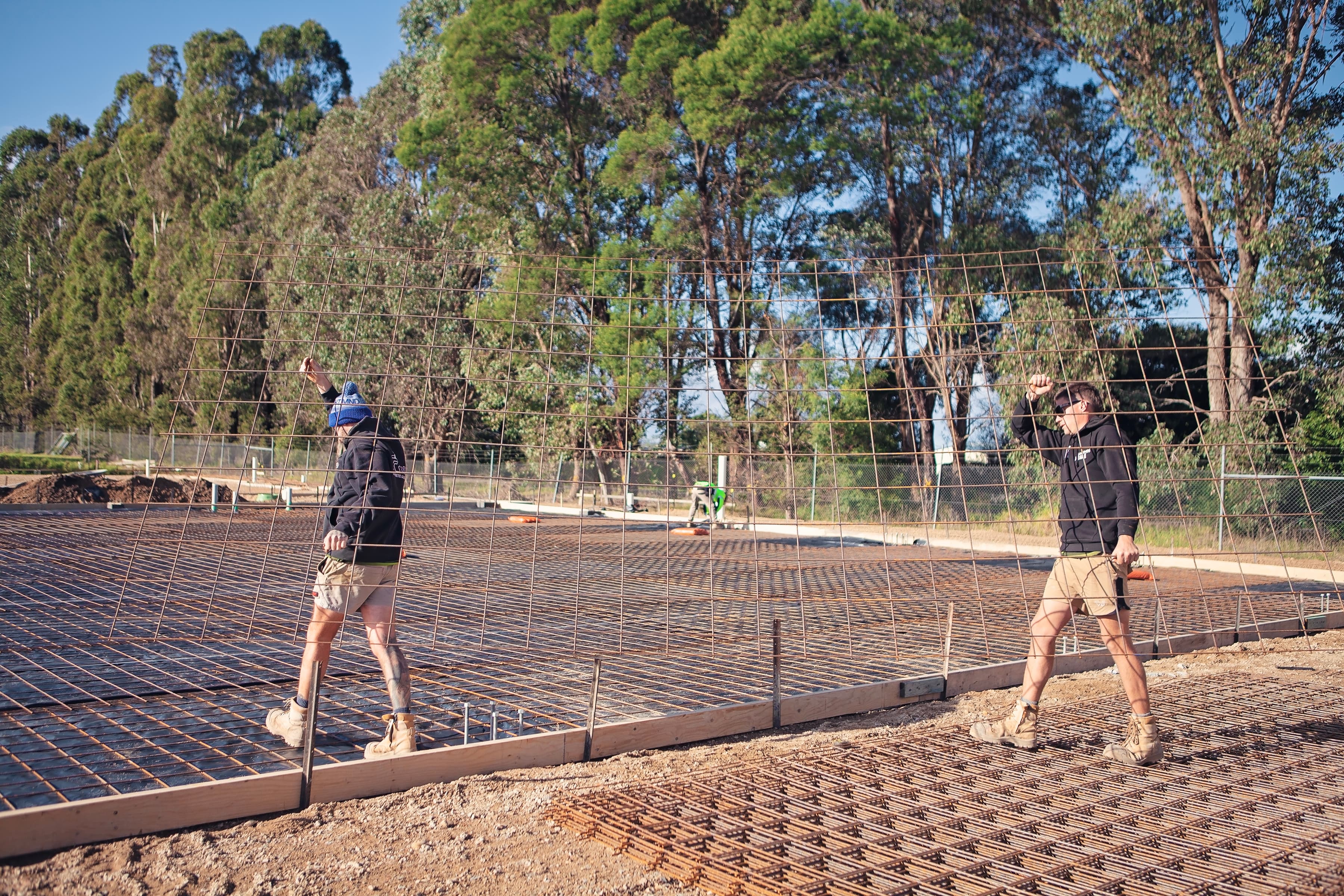
- Mesh (a welded steel grid) is the common choice for standard car driveways, positioned correctly within the slab so it actually does its job.
- Bar (heavier reinforcing rod, sometimes on a tighter spacing) comes in as the loads climb, for machinery access and truck-rated driveways.
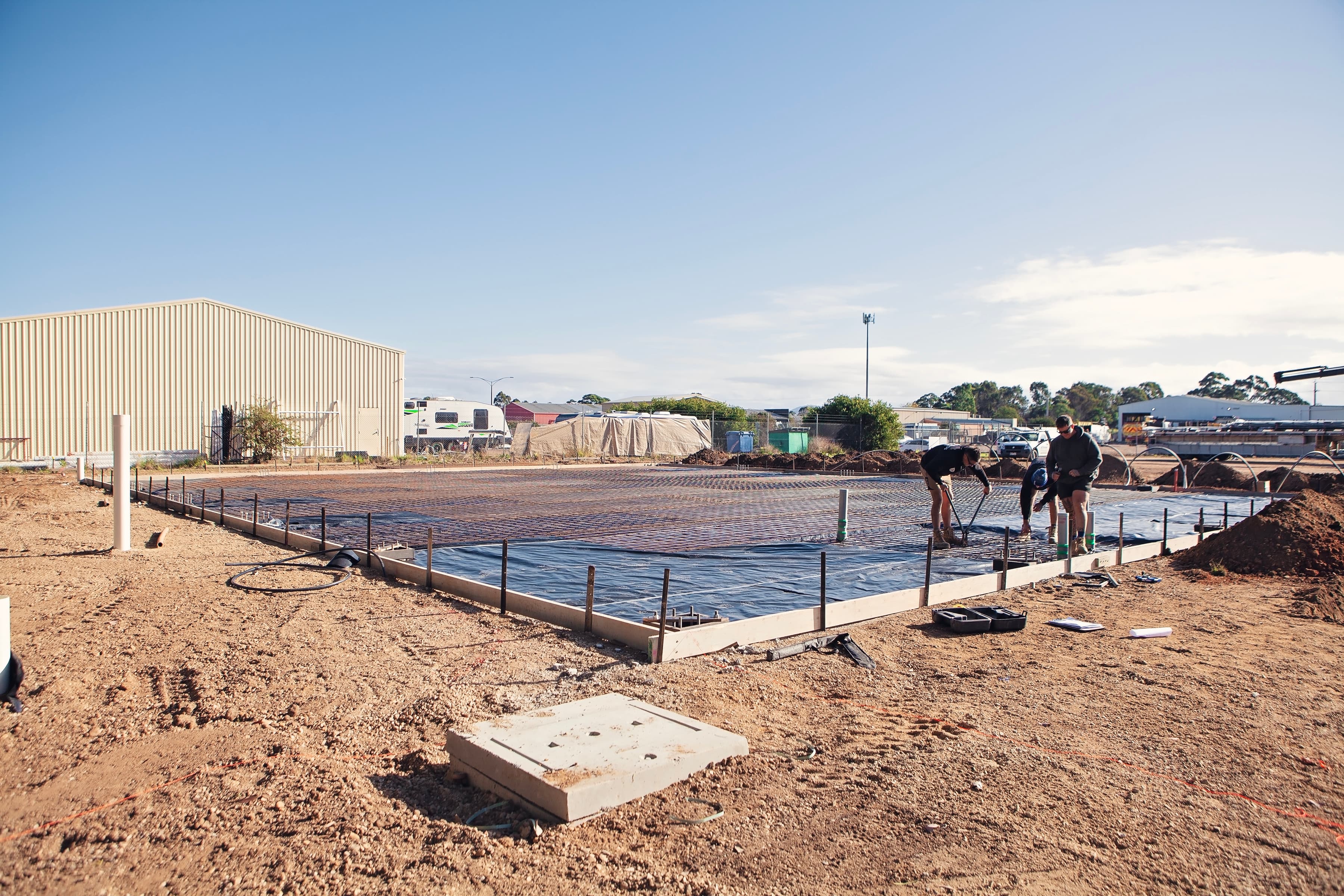
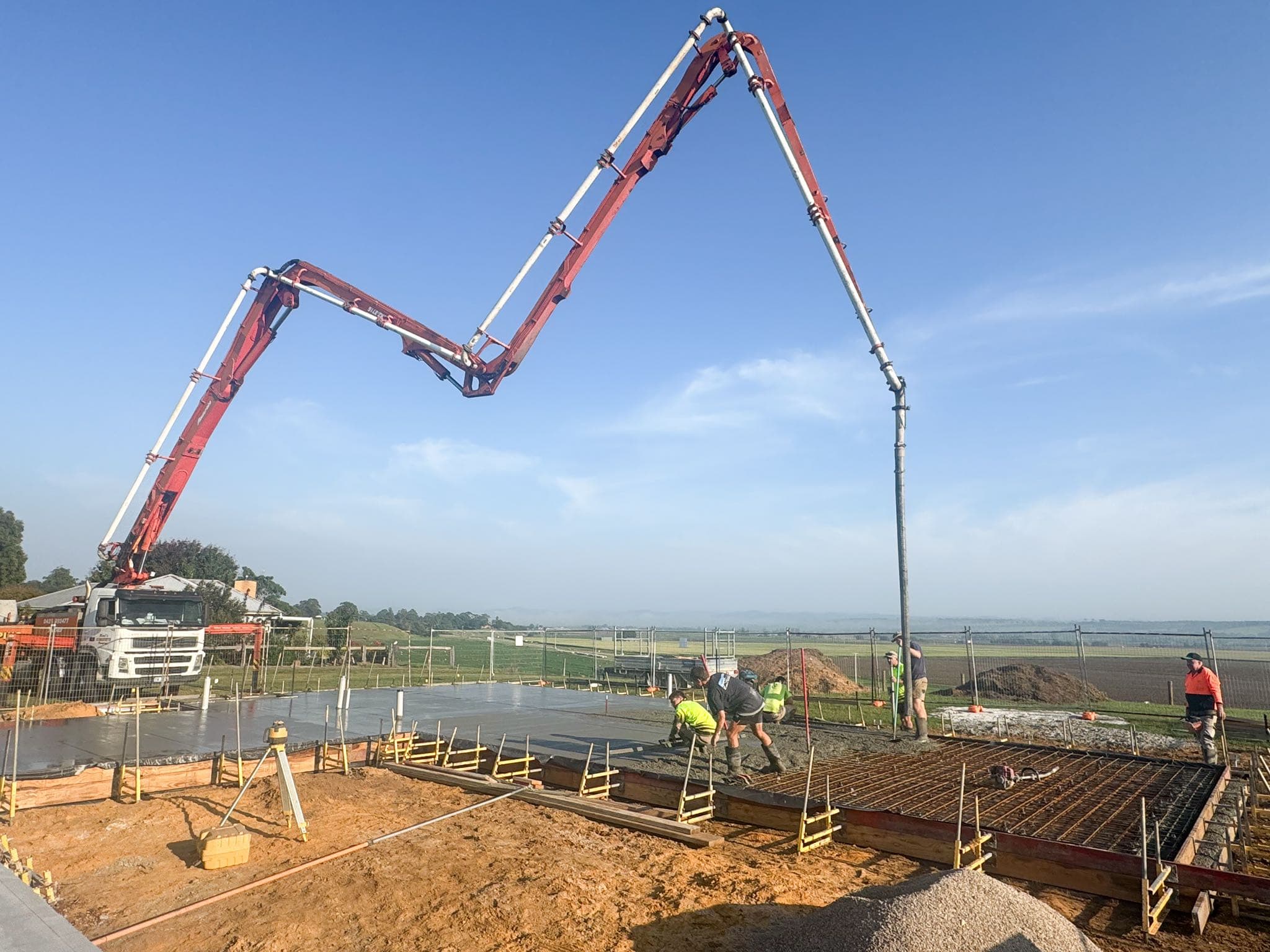
Placement matters as much as the gauge. Steel dropped on the ground and poured over does nothing. It has to sit at the right height in the slab, which is part of why the pour is worth getting a proper crew for.
The sub-base does half the work
A thick slab on a soft base still fails. What sits under the concrete carries the load and spreads it, so the base is not the place to save either.
Before we pour, we strip the topsoil and bring the base up in compacted layers to a firm, even level. On soft or reactive ground we go deeper or add more prep. This is where our one-team model earns its keep: the same crew does the excavation and the pour, so the base is prepared to suit the slab we’re about to lay, not handed over and hoped for.
- On the reactive clay inland toward Bairnsdale and Lindenow, the ground shifts as it wets and dries, so the base and often a touch more thickness keep the slab stable.
- Closer to Paynesville and Lakes Entrance, the sandy ground wants compacting in layers and sometimes imported fill to build a stable base.
- Rock under the topsoil changes the dig and can change the base build-up.
Control joints
Concrete moves. It shrinks as it cures and it expands and contracts with temperature. Control joints are the planned lines we cut or form so that any cracking happens where we want it, straight and hidden in a joint, not wandering across the surface.
Joint spacing is tied to slab thickness and width. Skip them or space them wrong and the slab decides where to crack for you. Done right, they are one of the quiet reasons a driveway still looks good in ten years.
The rural angle
A lot of East Gippsland driveways are not suburban. Out around Lindenow and Lucknow we lay driveways and access runs that carry tractors, headers, loaded trailers and delivery trucks. Those are not 100mm jobs. Machinery access needs the thickness and the steel to match the axle loads, and it is worth being upfront about everything the driveway will carry, including the once-a-season heavy stuff, so we spec it once and spec it right.
Why underspec cracks, and why it is dear to fix
An underspec driveway does not fail politely. It cracks, the edges break away, sections lift where the base moves under load, and once that starts you cannot patch your way out of it cheaply. The fix is usually breaking out the failed slab, sorting the base and pouring again, which costs far more than the thickness and steel would have on day one. Cracking is a whole topic in itself, and an underspec slab is one of the clearest examples of why concrete cracks and how we prevent it.
Getting the spec right
We do not guess thickness. We ask what the driveway will carry, look at the ground, and where there is engineering involved we build to the spec and the soil report. Then we put the thickness, the reinforcement and the joint plan in writing so you know exactly what you are getting. See our concrete driveways service for the full picture, or if you want a finish that suits the use, exposed aggregate, plain and coloured driveway finishes each behave differently underfoot.
Tell us the heaviest thing that will ever roll over it and we will spec it to last. Get a quote and we will walk your block.